

Anh Le shares how Opera Theatre of Saint Louis is Making Waves
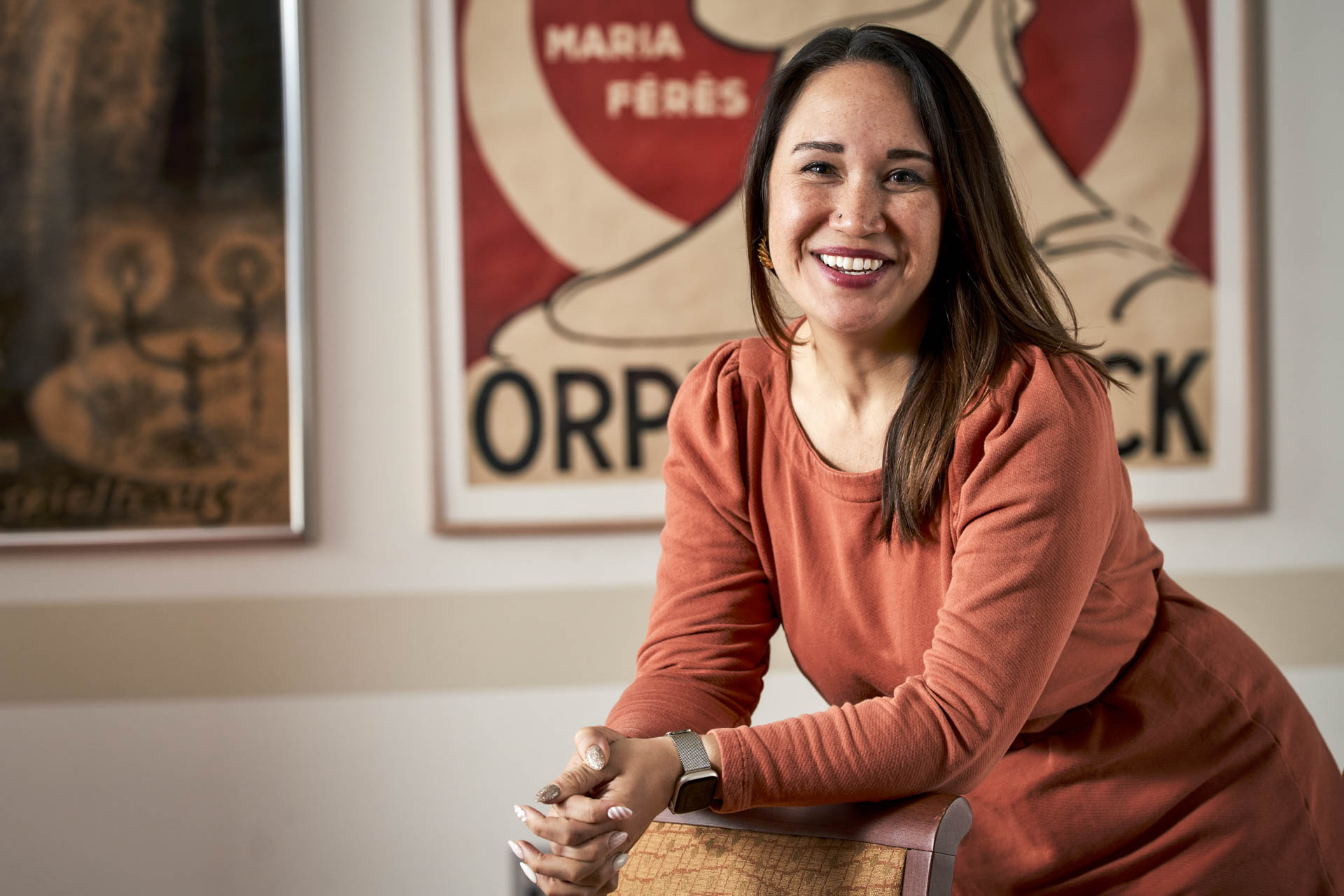
Give us an overview of the performances in the 2026 festival season.
I think one of the big delights of the 2026 festival season is the fact that basically all four titles are recognizable mainstream titles. And that’s a really rare privilege for an opera company; when you do an opera that people don’t recognize the name of, I think that’s an inherent obstacle to get over. And so I think just the fact that the four titles in this season have some level of just recognition is hopefully not only a great marketing tool for us, but a really welcoming invitation to the community.
We have “The Pirates of Penzance,” and there was that delightful 1980s Kevin Klein, Angela Lansbury production that made it to the movies. Then we have “The Light in the Piazza,” which is a very well-regarded Broadway musical. And it is truly a Broadway musical that has a lot of crossover with opera, but is anchored in the Broadway tradition. We have “A Streetcar Named Desire,” which is a very, very faithful adaptation of Tennessee Williams’s play. And of course Tennessee Williams lived here in St. Louis; he went to Soldan High and University City High. And then we have “Romeo and Juliet,” which is one of the most iconic titles in all of theater.
“The Pirates of Penzance” is an operetta. What is the difference between a traditional opera and an operetta?
I think operetta meant that it was not serious subject material; it’s very comedic, it’s very funny. It has dialogue in between the songs and there’s no scientific definition of exactly where the line lies between operetta and opera. I certainly think it’s true that operas and operettas all fed into what became musical theater. The trajectory was sort of opera and operetta, then vaudeville, then musical theater, and that led to Broadway. So it’s all part of the same evolution, just a few hundred years apart.
What I would love for people to know is “The Pirates of Penzance” is not a lesser show for being called an operetta. It actually has moments of stunning virtuosity, really amazing ensemble pieces, and there is one acapella section at the end of act one that belongs in a church — it is that level of glorious. In addition to being comedically delightful, it’s just a good time at the theater. It’s also so fun for kids and adults alike. It has jokes that parents will appreciate that the kids won’t get; it’s got slapstick that the kids will love. It’s just a little bit of everything for everyone.
Tell us about the other performances this season — their unique themes and what you love about each.
“The Light in the Piazza” is both funny and very romantic. The story really revolves around a mother and daughter who go to Italy on vacation. The daughter falls in love with a boy, and the mother’s not sure what to do. And so it’s not just romantic love, but it’s also the love between a mother and daughter. And it’s also about this mother who has this jaded view of love, kind of rediscovering that youthful sense of romance. And she has her own little romance. It’s just very human, and the music is gorgeous. It’s set in 1950s Florence, so it’s stylish, it’s so beautiful, so mod. And I always cry at the end.
And that one’s amazing, because we have two Broadway stars in it, alongside an opera cast. So there are two parents in the show, and they’ll be played by Kate Baldwin, who’s a two-time Tony Award nominee, And Paulo Szot, who is a unicorn of a human being and has won the Tony Award, was in “& Juliet” and “Hadestown,” but has also sung at La Scala and at The Met, and like every major opera house, like he truly does both and he does them so well.
Then “A Streetcar Named Desire,” that one’s definitely very dark. That is adult’s only opera subject material, exactly what it was in the play. So all of the things that we already know about “Streetcar” apply there. But I will say it is a really intense portrait of a woman who is being ripped apart psychologically in front of our eyes. It’s very gripping, it’s hard to watch, but it’s powerful.
And then for “Romeo and Juliet,” we are doing a traditional period production with beautiful, lush renaissance costumes on stage. And it is all about that youthful optimism again. Recently, our Juliet said something in rehearsal that I just thought was so true. She goes, “It’s amazing that even though the story has existed for centuries, every time you watch it, you think it’s going to end differently. Like you think they’re finally gonna make it out. And it’s always heartbreaking.”
And I think this cast, they’re young, they’re good-looking, they’re so talented, and I just think people are really gonna fall in love with them, fall in love with the opera, and the story all over again.
The ending of “Romeo and Juliet” may surprise some guests who haven’t seen the opera adaptation before.
One of the things that I really love about the opera, it’s mostly faithful, but it’s not the exact Shakespearean language because it was first written as a French opera and now has been retranslated back. And the original Shakespearean English doesn’t fit the music. So it sounds a bit different, but one of the biggest structural differences in the opera is that we lose the epilogue. So the opera ends at the end of the tomb scene with the two young lovers; it ends with them dying together. And there’s nothing after that. So you’re really left sitting in that moment.
But the composer made one really big change, which is that Juliet wakes up before Romeo dies. And so they get this final moment together where they’re overjoyed at being together again. They’ve been reunited and they’re singing about their future and about what life outside of Verona will look like for them. But Romeo’s already drunk the poison. And so when he begins to weaken, that’s when Juliet says like, I’m not staying behind without you. And she takes his dagger and they die at the same time.
Such a big part of the experience of Opera Theatre performances is the stage and set design and the costuming. Tell us about what audiences can expect this season.
This season’s productions are so visually stunning each in their own way. “Pirates” literally has a pirate ship that comes out and spins around on stage. “The Light in the Piazza” has this gorgeous, huge fresco mural that is the entire backdrop of the set of a classical Italian painting of a woman that was hand-painted in our scene shop by painters who live and work here in St. Louis. It’s stunning. “Romeo and Juliet” has these lush, beautiful costumes; very traditional renaissance, really gorgeous. And then “A Streetcar Named Desire” is on an incredibly realistic set of a small New Orleans apartment, but the backdrop, the walls are all wood shutters, but with light streaming through them in a really beautiful way. It’s very atmospheric. Even though the Kowalskis don’t live in a lavish rich house, it puts you in the time and the space so powerfully.
Opera Theatre’s designers come from all over the world, but so much of the costuming, scene and paint shop artists are from St. Louis. Tell us about that and how it helps support the artistic community here.
Pretty much everyone in our costume and our scene and our paint shop is from St. Louis. And our designers consistently year over year are so impressed and surprised by the level of expertise they find here, because it doesn’t exist anywhere else. It is so hard now for technical artists to make a living in this, and because St. Louis has The Muny, The Rep, STAGES, and Opera Theatre, they are able to actually make a year-round living out of this work. And it’s one of the reasons that we continue to have this incredibly deep bench of talent right here. So St. Louis should be very proud that it has built and maintained a community where artists can live, work, be successful, and flourish at what they do.
For the uninitiated, tell us about what guests can expect before and after Opera Theatre performances on the grounds of Webster University, and what you love about it.
I think what makes any live performance so special, especially right now, is the fact that you rarely get together with 800 other people to experience something live and in community. And so it’s really important to us at Opera Theatre that that sense of community extends before the show and after the show. So when you first arrive, you’re greeted by these beautiful gardens. People are picnicking, you’re welcome to picnic, you can buy food from us, you can bring your own, you can bring it from home, you can get takeout from your favorite restaurant, support your local businesses. People are just enjoying a lovely summer evening in the gardens.
And then after the show, it’s so weird to get back into your car and just drive home and be left sitting alone with this thing you’ve just experienced. So we open up the tents in our gardens and people can come back, they can talk with other audience members, they can order Champagne and dessert. We put candles out on every table, and the cast actually comes out every single night. And you don’t have to be a donor or a high-level ticket buyer to get to meet those members of the cast. They’re just right there in the gardens with you. It’s very egalitarian, it’s very democratic, and it just feels really St. Louis and really community-focused. It’s just about continuing to be together in dialogue with art and with one another. And that is something I think that’s really special about our experience, and one of the things I love most about any night at Opera Theatre.
Opera Theatre of Saint Louis shared some big news about its future new home last December. What can you share with us about those plans?
Yes, we announced last that we had bought a new piece of land in Clayton, the former site of the Caleres headquarters, and it is our intention to redevelop that site into a state-of-the-art performing arts center. The goal being that it’s not just a new home for Opera Theatre, but a new home for the arts in St. Louis. And that it will be something that will be of use and value to many different arts organizations and students and working artists and the community.
We are still very much in the early stages; we are designing, cost estimating, all the things that go into a really complicated project. So we don’t have much that we can share yet because we’re still figuring out for ourselves what that will look like exactly, but we are really grateful that our supporters have helped us be in a strong enough position that this is even something we can contemplate. It’s very rare for an arts organization, and especially right now, to be doing well enough that they can contemplate taking on a capital project of this size and scale. So that is 100-percent thanks to the donors, subscribers, and community partners who have been part of our history over the past 50 years.
I will say, one of the questions that I get asked most often is, “So is next season in Clayton?” And the answer is no, this is a multi-year process, this is years away. This is going to be a very slow process and the community will have lots of heads up before the move is actually made. There’s an interesting thing, too, with opera houses called tuning the building. So even when you open a new building, you have to have time to learn how the building works and to make sure you’re ready to stage a performance. So we’ll have to tune the building once we move in.
What does it mean to you for Opera Theatre to see this sort of growth and investment? And what does it mean for St. Louis?
I think what a new theater represents for us, first of all, is the ability to take our artistic product to the next level. There are certain inherent limitations that we face in our current space, as generous and as wonderful a partner as Webster University has been. The Loretto-Hilton Center was never built for opera. It doesn’t have opera acoustics. It has a very small orchestra pit. The St. Louis Symphony Orchestra have been angelically patient for years, for decades with us, but it’s not a space built to house a symphony. And so I think there are certain operas we will be able to do in a theater built for opera that we just can’t do right now. It will open up new opportunities for us to bring in young artists and young artisans and designers who are excited to work with more modernized equipment and technology.
I think the facility will be a draw to new audiences, so both backstage and front of stage. This is going to grow the broader opera theater community in a way that is exciting, both for the people who come to work here, but also for the people who come to performances here.
And I also think the idea of a building dedicated broadly to the performing arts in as interesting and vibrant a neighborhood as Clayton means a lot for Clayton. We’re hearing a lot of excitement from businesses about foot traffic, about restaurant sales, shopping, boutiques, hotels. I think there will be a real lift there, but also, it’ll be a huge win for us as well. It’s a great place to be, and it’s accessible by multiple highways, much closer to public transportation. And I think we are excited to be hopefully feeling more central to more of our community.
Join the Story
- Learn more about Opera Theatre of Saint Louis on the company’s website.
- Keep up with Opera Theatre on Instagram, Facebook, and TikTok.
- Connect with Opera Theatre on LinkedIn.
- Watch past Opera Theatre performances on YouTube.
- Discover more about Opera Theatre in this HEC-TV video.
- Explore more STLMade stories about our local arts and culture scene.