Centered on Art
The Foundry Art Centre in St. Charles creates community through unique exhibitions, artist development, education and outreach, and more.
Hilda Andres, executive director of the Foundry Art Centre in historic St. Charles, grew up in Lebanon and moved to the United States to attend college. She studied interior design at the University of Texas at San Antonio, where she met her husband, an architecture student. Over the years, as they built a life together, they moved multiple times for professional reasons.
In each new community, Andres found herself searching for a place of belonging and enrichment.
“I would go to the library, the art museum, the local community art center,” she recalls. “I was always trying to find my ‘third place.’” This term, coined by American sociologist Ray Oldenburg, characterizes places of connection and engagement beyond the first two domains of life, defined by Oldenburg as the home and the workplace.
Having landed at the Foundry, Andres now creates a generous third place for the St. Charles and broader St. Louis community. Her work is informed by a multifaceted career that includes a return to college to earn a bachelor’s degree in fine art and a suite of leadership roles at various U.S. art museums. “All my experiences, I feel like they were preparing me to be where I am today,” she says.
The Foundry is located near Main Street in a former train car factory from the 1870s — now an expansive space filled with abundant natural light. The institution recently celebrated its 20th anniversary, having served the St. Louis community since 2004.
“The history gives it a kind of soul,” Andres says. “And now you have all this creativity happening from all directions. You can feel the energy from the artists upstairs, the classes happening downstairs, the galleries. And when you come in, there’s usually always someone greeting you and welcoming you.”
The Foundry operates as a third place in several key ways. First, it’s an art gallery with an ongoing array of creatively themed exhibitions. Second, it’s home to working artists who interact with the public and share their processes as they create custom artworks and build entrepreneurial ventures. Third, it’s a site of lifelong learning, offering workshops and classes to art enthusiasts of all ages and experience levels. Beyond that, it’s a cherished local event space. Through each of these avenues, the Foundry promotes enrichment, inclusion, and belonging through art.
Artists in Action
The Foundry’s 12 artist studios line a second-floor periphery overlooking the atrium of the Grand Hall: Together, they are home to a talented group of artists representing diverse ages, interests, experiences, and mediums. “You have fiber; you have mosaics. You have jewelry; you have clay. And you have all different kinds of paintings,” Andres explains.
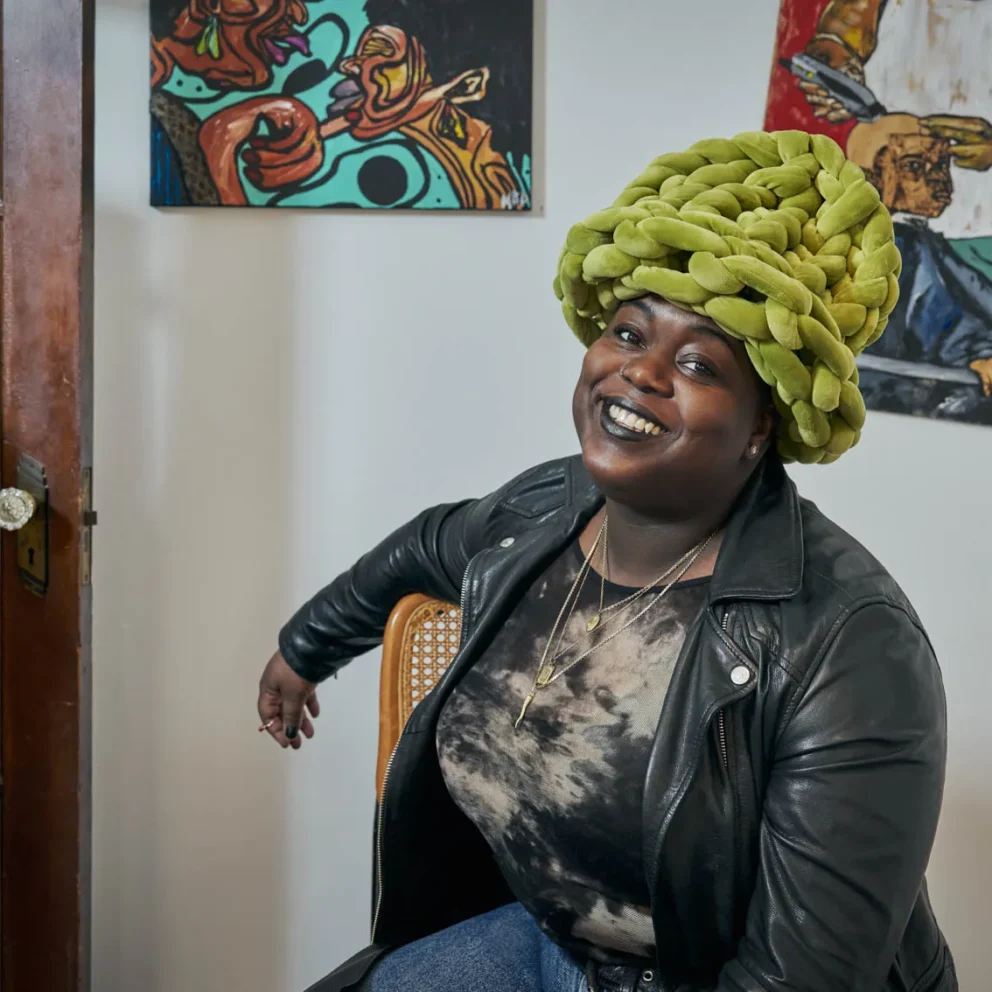
The artists include up-and-coming local talent like Taylor Marrie, an award-winning 2023 graduate of Webster University who “will paint on anything,” according to Andres, specializing in “intense figures and faces.”
Marrie works alongside veteran international artists, such as Sue Giannotti, Italian-trained in the classical method of mosaics, who uses traditional processes to craft unique, contemporary works. Evan Church — a painter who spent his high school years in Kenya and lived in several other African countries as an adult — renders stunning figures and landscapes inspired by his time on the African continent. And their colleague Zack Smithey is a highly sought interdisciplinary artist who makes short films, album cover art, shipping container homes, and more.
With this diversity, the Foundry serves as an extraordinary community for the artists themselves in addition to the broader public. They practice in highly visible spaces walled in by glass, and each studio maintains an open-door policy for at least 15 hours per week as part of its lease contract. “It has been said that the galleries are the heart of the Foundry, but the artist studios are the soul,” Andres says. “You can go and see a gallery anywhere, but to have that experience with working artists is really special.”
Exhibitions for Everyone
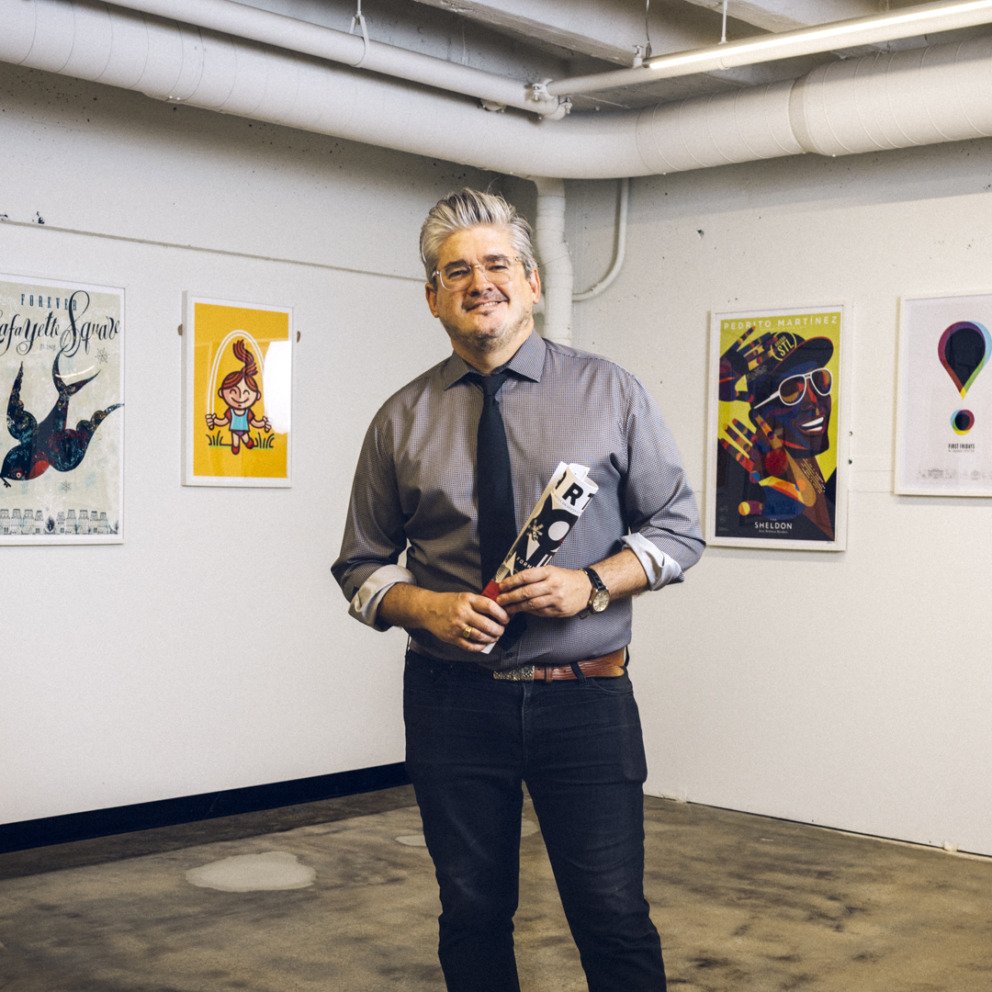
With Director of Exhibitions Jessica Mannisi at the helm, the organization has hosted some indisputably original exhibits in recent years. They reflect a distinctive commitment to making art fun and accessible, and to showcasing the region’s incredible artistic talent.
In winter 2024, for example, the Foundry hosted “Wag: An Exhibition for Dogs.” It displayed original works by local artists such as Greta Coalier and Justin King in dog-friendly colors (dogs can only see shades of yellow, blue, gray, and brown) at dog-friendly heights, and with special flourishes like scent markers, aka cotton balls dipped in dog-friendly essential oils. “The majority of people in the U.S. love dogs. We thought, maybe they don’t know that they also love art,” Mannisi says.
Later that summer, the Foundry featured a themed exhibition on the art of tattooing in conjunction with a tattoo arts and crafts fair. To curate the exhibit, Mannisi traveled across the state of Missouri with photographer Mary Van Winkle, documenting the creative process of artists at 22 different tattoo studios.
This spring, the institution will host the American Society of Botanical Artists for a national exhibition of watercolors depicting plants and flowers in intricate detail, accompanied by panel discussions about sustainability. “I love when science and art can be combined,” Mannisi says. “What these botanical artists do is absolutely exquisite. And I’m really excited about the conversations that will take place about crop diversity.”
Through these and many other upcoming exhibitions, the Foundry uses touchpoints of modern life — tattoos, dogs, environmental concerns — as access points into the world of contemporary art. In doing so, it casts a wide net and attracts new and sometimes unlikely visitors, including those who enter on a leash. (While the Foundry does not have a membership program for humans, dogs can join for as little as $40 annually.)
An Invitation to Make Art
Operating as a third place, however, is not only about drawing visitors in — it’s about fostering dynamic interactions. Enter Christine Tavares, a potter and former school art teacher who is the institution’s education and program coordinator.
Tavares’ large roster of responsibilities includes managing an adult clay studio membership program, collaborating with Summer Camp Director Michele Kerans on eight weeks of summer camp, and leading year-round workshops for both children and adults. She also administers and curates the Baue Family Children’s Gallery, which has showcased student artwork from more than 300 K-12 schools across the St. Louis region. “It’s all about community,” Tavares says. “If you’ve never been to the Foundry, just come see all that we have available.”
Opportunities for engagement include a slate of regular, free events. Open-studio family workshops are held every Saturday, in which families can complete a self-guided project together, new each month. Similarly, the popular “First Fridays” event series gives visitors the chance to tour the galleries and participate in themed art activities on the first Friday evening of each month. “Art Start” is another free, come-as-you-are program that combines reading and art for children ages 2 to 5 and their caregivers.
On June 14, 2025, the Foundry will celebrate its fifth-annual Block Party, an event Mannisi originated in conjunction with its “Off the Block Print Show.” As the largest steamroller print event in the U.S., it features large-scale images by regional artists, carved on big wood blocks. These are covered in ink and canvas and run over with a steamroller, creating distinctive prints that hang to dry in the Foundry’s Grand Hall. The day’s festivities also include other interactive art projects, food and drink, a print market, and live music. In 2024, over 4,000 people attended.
For Mannisi, such events and exhibitions are a chance to highlight underrepresented artistic voices across the region. “A lot of times when we think about the St. Louis art scene, we just think about the city,” she says. And Mannisi would know this — as a proud St. Louis resident and the former curatorial director of the Houska Gallery in the Central West End, she is both well informed and deeply appreciative of the city’s talent. Yet she encourages other St. Louis art lovers to make the trek across the river to see what they can discover at the Foundry. “There are so many artists on the periphery of the city, whether in St. Louis County, across the river in Illinois, or here in St. Charles County. It’s really special that the Foundry can be a space for them.”
Community Connections
The Foundry is also a dedicated space for those who find personal healing through art. Andres has witnessed many of their stories, including that of a man with early-stage dementia who participated in the center’s partnership with The Bev Roy Hope Foundation — a nonprofit designed to support such individuals and their caregivers.
The man was getting frustrated during a collage activity, repeatedly gluing on the wrong side of the paper, she recalls. Andres took him into a nearby gallery, which contained works at the time by Foundry studio artist Ann Croghan, who paints dramatic, spiritually evocative skyscapes. Soon, he began avidly sharing his thoughts and reactions. Signs of dementia faded. A lightbulb went on, and he turned to Andres, calmly announcing his error with the paper and the glue. “The brain works in amazing ways, and the arts can do so much,” she says.
It all comes back to being a place of inspiration and belonging, she adds. “The Foundry has it all. You can come and see real artists working, then come back and see their progress. You can explore the galleries and have conversations with our staff. And of course, you can make your own art. We’re hoping that a little bit at a time, all these activities — centered around art — will enhance and improve people’s quality of life.”