Humans of St. Louis:
Civic City Fellows
Last year, high school students in the Civic City Fellows program identified challenges and priorities to help shape St. Louis’ future. This year’s youth are building solutions.
Editor’s Note: Over the next few days, we’re sharing the story of Civic City Fellows as part of a Humans of St. Louis and STLMade collaboration profiling ongoing tornado recovery efforts across St. Louis. We will update this story with new content as it publishes on our Facebook and Instagram pages this week. And learn how to get involved in tornado relief and recovery efforts across St. Louis.
A city for some builds systems that lock people out. A city for all opens doors, restores trust, and expands what’s possible for every resident.
What if the people closest to the city’s challenges were trusted to help shape its future?
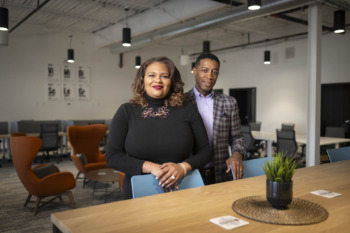
That question sits at the heart of Civic City, a local civic design studio co-founded by Darren Jackson and Sara Bannoura.
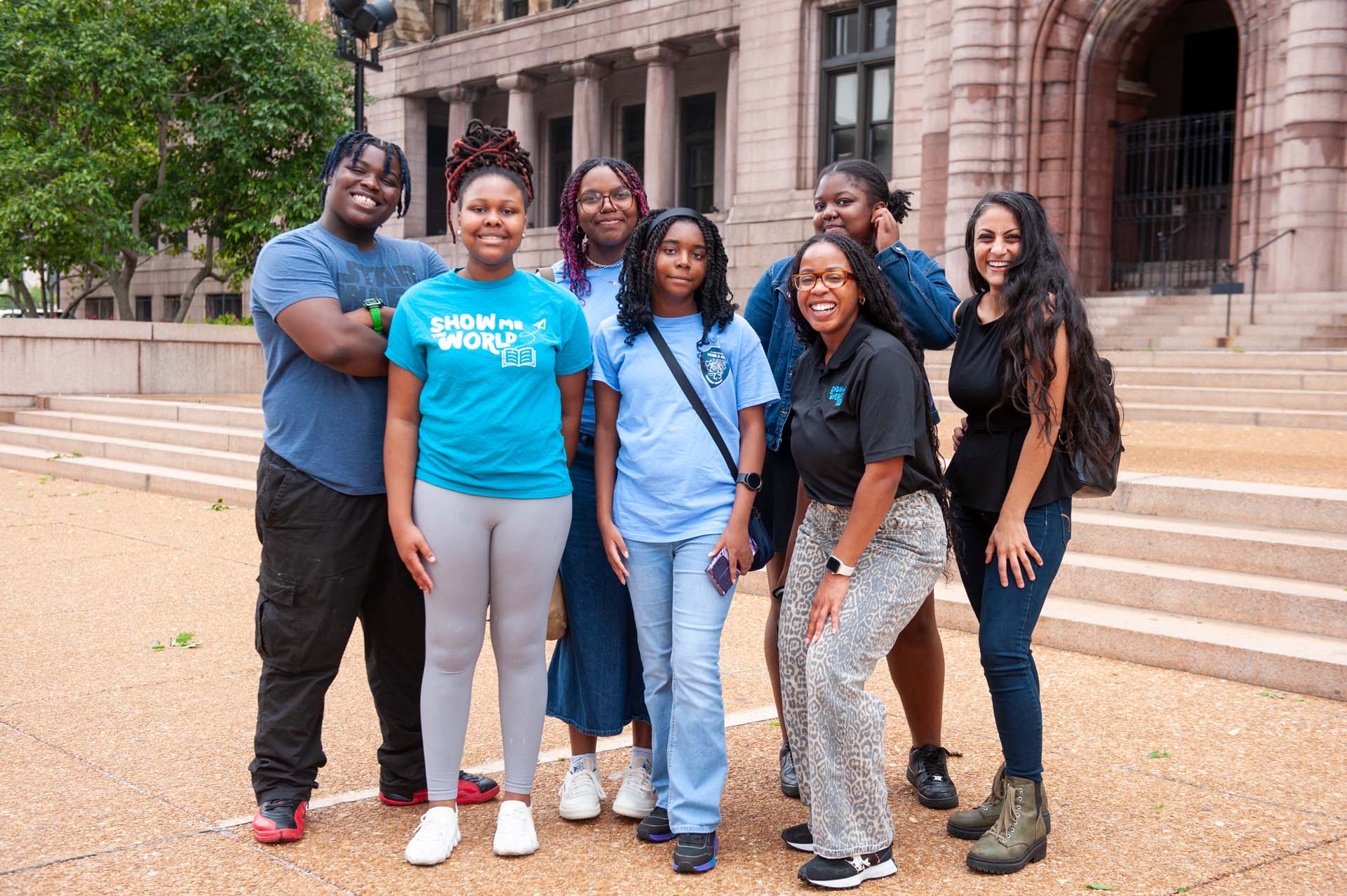
Last summer, just one month after the May 16 tornado, students from Saint Louis Public Schools came together for Civic City’s first youth Fellowship in collaboration with the St. Louis Education Fund and Show Me The World Project.
Over two weeks, students explored issues affecting their neighborhoods, like food access, transportation, mental health, public safety, vacant lots, and the digital divide. They studied local government, shared personal stories, researched community challenges, and created a resolution calling on STL to rebuild with youth voices at the table. Then they took that resolution to the City of St. Louis.
HOSTL was invited to their final presentation last June at Saint Louis University. Listening, it was evident just how much work they put into understanding the challenges facing our city and the solutions they wanted to see. And a month later, they were honored guests at City Hall, presenting their resolution during a City Youth Council mock Board of Aldermen session. Camera in hand, we documented both.
Witnessing the Fellows’ accomplishments was inspirational, because how often are teenagers in our city given a chance to weigh in on topics like a natural disaster, which affected so many, including themselves?
This summer, a new 2026 cohort is building on that work in a different way.
Last year’s students identified challenges and priorities. This year’s students are building solutions for them through technology, design, and problem-solving. As the 2026 cohort develops its projects, we wanted to look back at the students who helped lay the foundation. Over the next few days, we’ll be sharing pieces of their journey, their ideas, and the future they hope to see for St. Louis.
“The tornado changed so much for our fellows. Almost everyone had been impacted in some way. Some had damage to their homes. Some were at school, and debris broke windows. But one in particular experienced the most devastating loss: her grandmother in the basement of a church.
The room changed when she shared this with us. You could feel the weight of it. The students held space for her with so much care. Suddenly, this wasn’t just something we were researching or talking about. It was personal. It was real.
And in a lot of ways, that moment opened the door for others to start sharing too. At first, many of the students weren’t sure if what they carried was worth naming. But day by day, more of them stepped into their stories, and it was an honor watching that unfold.
We shifted, adapted, and made room for things that demanded more space. Our fellows wrestled with some really tough questions. They explored challenges, identified possibilities, and mapped community solutions. By the end, they co-created a public declaration centered around one guiding question:
What do we believe every child in St. Louis deserves as they play, learn, grow, and heal?
We grounded the work in some of my favorite things to talk about: research, storytelling, and advocacy. We explored design thinking using an internal framework that uses community-led knowledge, narrative, and design goals to build new systems and solutions.
We discovered stories, our own and each other’s. We watched news coverage and talked about the power of storytelling and story omission. We looked at how stories not only reflect but also shape our reality, or our perception of it. We explored media across formats, and practiced how to interview with care and curiosity. And through empathy mapping, students learned to better understand how people see, feel, hear, and experience the world.
They started to realize how their stories were not just individual experiences but something much more. They were connected to each other, connected to the city, and connected to systems much larger than themselves.”
Sara Bannoura, Co-Founder, Civic City
“This Fellowship was designed to help our young leaders become active participants in civic life. Today, I’m proud to say every student can name their neighborhood, the ward they live in, their alderperson, and explain how a bill becomes law. This kind of civic awareness is so important, but too often taken for granted.
I share this as someone who didn’t grow up here and didn’t always feel this way. I was raised in Palestine, where politics wasn’t something you participated in. It was power exercised over you. So when I moved to the United States, I kept my distance.
Even as I entered the field of journalism, I avoided all things politics as long as I could and for as much as I could get away with. It was too complicated, too out of reach. Like it belonged to someone else. It wasn’t until my second year working inside a newsroom that I began intentionally studying local government and learning what the Board of Aldermen actually does. I went through college and two years in local news before fully confronting how close government is to our daily lives. Working in the newsroom during the pandemic made that impossible to ignore. I saw in real time how systems operate, and what happens to our communities when they fail.
And as I tell you this, my family overseas feels those ripple effects, too. The consequences of decisions and policies made thousands of miles away here in the U.S. This is when civic participation stops being abstract and becomes personal.
Our Fellows will soon be able to vote. And I don’t want their voice to be far from the ballot. I don’t want their dreams to skip the possibility of one day representing their neighbors and communities. I want them to see themselves not just as participants in democracy, but as leaders shaping it.”
Sara Bannoura, Co-Founder, Civic City
“We had the opportunity to meet with Alderwoman Laura Keys of the 11th Ward, who spoke to our fellows about everyday leadership and the mechanics of public service. She walked them through how a single idea becomes policy: how lived experience becomes a draft, how a draft becomes a bill, and how a bill becomes law.
But she didn’t present government as something distant or abstract. She made it personal. ‘I am the elected official of the people of the Elevated 11th Ward,’ she told them. ‘Your moms and dads, they’re my bosses.’
In that moment, government felt closer. Tangible. Human. She modeled what it looks like to translate community voice into action. And she reminded our students that democracy is not reserved for a select few. It belongs to everybody.”
Sara Bannoura, Co-Founder, Civic City
“We began with the Story of Self. We asked:
- What shaped you?
- What have you overcome?
- What experiences have defined you?
Then, we moved to the Story of Us:
- What does our community value?
- What does it endure?
- What binds us together?
Finally, we explored the Story of Now:
- As St. Louis rebuilds, what must happen right now to ensure every child can play, learn, grow, and prosper?
- Who are we rebuilding for?
- How do we ensure the future is built with them, not around them?
It was a little difficult at first. When I introduced the first assignment, one student asked, ‘What if you don’t have a story? What if you don’t have a challenge to name?’
Later, we learned he had lost his best friend in a hit-and-run the year before, the deadliest year on record for pedestrians in St. Louis City and County. That’s the thing about stories. Sometimes they’re buried beneath grief and survival. Sometimes we need the right questions, a gentle nudge, or to hear someone else’s voice before we’re able to find our own. Although it was difficult for the students to pinpoint some of their stories, they were within.
We watched a TED Talk by a young hip-hop artist who challenged us to be the authors of our lives. To dare to name a vision, to write it down, and speak it aloud. He asked, ‘What would you title the current chapter of your life?’
My favorite answer was, ‘Here All Along.’
That stayed with me. Their stories, their power, their voice — they were all here all along. It all just needed space to emerge.”
Sara Bannoura, Co-Founder, Civic City
“2024 was the deadliest year on record for pedestrians in St. Louis City and County. In the city alone, 23 pedestrians were killed, often on wide, fast, and poorly designed roads. Our neighborhoods need safer streets, slower traffic, and better crossroads, not more tragedy.”
Carmen, Civic City Fellows
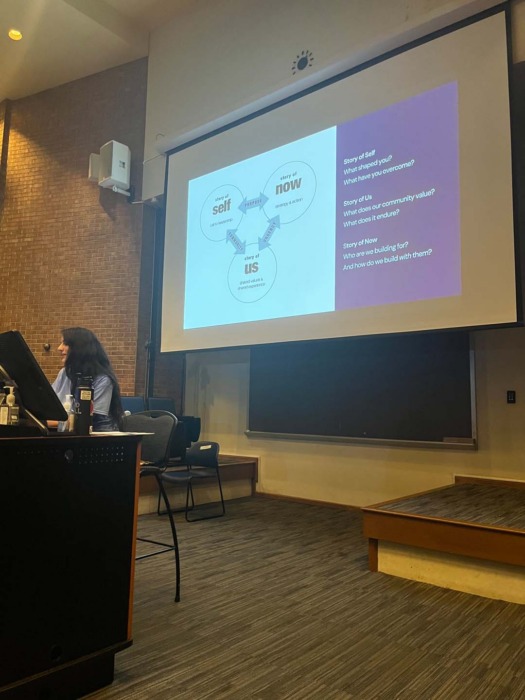
“We don’t build stories all at once. We build them like homes, one brick at a time. And we’re not building alone. We’re part of a city full of bricks, each one carrying its own history, loss, and resilience. Alderwoman Keys told our students that she wants our city to be kinder after the storm. She said, ‘We’re all going through our own unique storm. You never really know.’
As part of our research, students analyzed firsthand accounts from tornado survivors, including stories archived by Humans of St. Louis, to understand how people were experiencing this moment in real time. They weren’t just reading for emotion. They were reading for patterns, values, and gaps.
Reflection quickly led to harder questions:
- Who gets to rebuild?
- Will redevelopment displace the very residents most affected?
- Will this moment accelerate gentrification — or finally drive meaningful investment in neighborhoods long overlooked and under-resourced?
- Will this be an opportunity to invest in areas north of Delmar like never before?
We studied redlining and economic and housing inequities that have shaped St. Louis for generations. Because rebuilding isn’t just about replacing roofs. It’s about deciding whose safety, stability, and future are prioritized. And if recovery doesn’t address root causes, it risks repeating them.”
Sara Bannoura, Co-Founder, Civic City
“The Story of Now became the Fellows’ final product.
In just two weeks, students moved from reflection to action, recognizing that their individual stories are part of a larger system. It’s not always easy to step out of isolation. Survival can make us shrink inward. But returning to our guiding question — What do we believe each child deserves in St. Louis? — required them to think collectively.
If young people are the ones who will inherit this city, how should it be rebuilt? And how do we ensure their voices are centered in shaping it?
Their answer took the form of a resolution: a call for the City of St. Louis to prioritize youth voice and equity as it rebuilds.
“The Impact We Need to See in Our Community”
“We, the Civic City Fellows of 2025, respectfully submit this resolution to the City of St. Louis on behalf of the youth in our city — especially those impacted by the May 16 tornado and generations of disinvestment that made our neighborhoods more vulnerable to disaster…”
Sara Bannoura, Co-Founder, Civic City
Everything included in the resolution began as ideas written on Post-it notes, shaped by lived experience, small-group dialogue, and honest reflection.
Students believe every child in St. Louis deserves:
- A loving and stable home.
- Clothes, shoes, and basic necessities.
- Access to free hygiene and feminine products.
- Fresh, nutritious, affordable, and culturally-affirming food.
- Safe, walkable, well-lit neighborhoods with well-maintained streets and sidewalks.
- Safe, reliable, and youth-friendly public transportation.
- Clean, green, and eco-friendly communities that promote sustainable living.
- Access to technology and reliable internet.
- Mental health support, trauma-informed care, and school-based counseling.
- Consistent after-school programs and enriching activities.
- Youth-centered job training and professional development.
- Access to bank accounts and financial literacy tools.
- Free and welcoming public spaces created for youth.
- The chance to grow up without fear of violence or reckless driving.
What do you believe the children of this city are missing and deserve?
Sara Bannoura, Co-Founder, Civic City
It’s Hotter Where We Live
“In St. Louis, a 10% drop in tree canopy can mean a 15-degree hotter streak. In our hottest neighborhoods, the heat index is already 18 degrees above average.”
-Deshawn, Civic City Fellows
“The estimate is that 5,000 trees were damaged by the tornado. It’s probably more. I don’t know who’s running around counting every single tree. If you have two neighborhoods and one of them just has 10% less trees than the other, that’s a 15-degree difference. We went through heat warnings this past summer. So when we say we want more trees to cool our communities, it’s actually life and death in some situations. And not only do we want trees for shade. It’ll be so beautiful if some are fruit trees. And we can walk around the neighborhood and pick fruit and eat it.”
Sara Bannoura, Co-Founder, Civic City
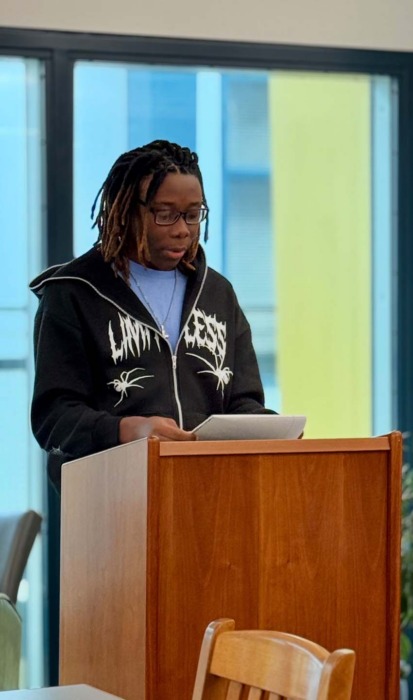
Civic City Fellow Deshawn presenting.
A Digital Divide
“In St. Louis, more than half of Black households have no Internet. One in four families has no computer at all. Access to tech is access to education and to the future.
In some schools here, students have to share computers, and others don’t have them at all. We don’t have access to some assignments that may be online, so we fall behind. Also, some things don’t connect when we’re working at home. So, with the digital divide overall, without access to tech or the Internet, it can affect our academics and critical thinking.”
-Jaeli, Civic City Fellows
“Fifty-five percent of Black students don’t have Internet, and 25% have no computers. I don’t even know how schools survived during the pandemic. Think about it, what did the students do? Every recommendation comes from a personal story, a personal experience. And for those who do have access, it’s often hard for them to empathize and put themselves into the shoes of someone who doesn’t. This requires us to really slow down and listen.”
Sara Bannoura, Co-Founder, Civic City
Child Hunger
“Food insecurity doesn’t mean just hunger. It means distraction, anxiety, and health problems. It affects nearly 54,000 people in the city, including 16,000 children.”
-Pharoah, Civic City Fellows
“Once students shared their personal stories and mapped community values, they turned to research to understand the larger picture. What they found confirmed that their experiences were not isolated, but part of a larger system. One of the most urgent priorities they named was food.
Even before the tornado, nearly one in three children in St. Louis faced food insecurity. When the storm disrupted power, income, and housing stability, it compounded hardship for thousands of families already navigating limited access.
Food insecurity is not simply an empty stomach. It shapes how students concentrate in school, how families manage stress, and how communities heal and build long-term health.”
Sara Bannoura, Co-Founder, Civic City
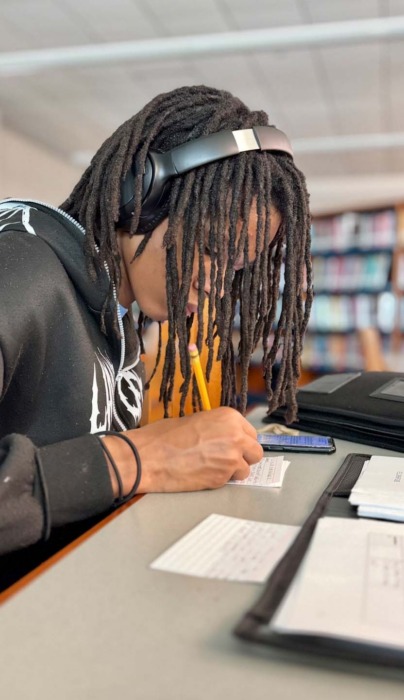
Pharoah writing during a Civic City Fellows session.
“Access to food is personal to me. My family grew much of the food we ate in Palestine. Olive trees, citrus and fruit trees, all kinds of vegetables, eggs from our chickens, herbs harvested fresh each morning. We preserved what we couldn’t finish for the colder months. Nutritious, organic food was part of everyday life. And I didn’t fully understand how deeply food is tied to identity, health and stability until I moved to the U.S. and no longer had that access.
During the pandemic, we constantly heard about pre-existing conditions and co-morbidities that made some communities more vulnerable to COVID. What we heard far less about was how many of those chronic illnesses are connected to decades of poverty and unequal access to wealth, health care, and nutritious food. When communities go generations without reliable access to healthy options, affordable care, and the resources needed to live well, the body carries those consequences. That’s not personal failure. That’s the outcome of how systems have been designed.
And when one in three children in our city faces food insecurity, we’re no longer talking about individual choices. We’re looking at a citywide issue we can’t afford to ignore. It’s not as if we lack the land or the talent to grow more food. St. Louis is home to one of the highest concentrations of plant scientists and agricultural researchers in the world. We also have 12,700 vacant lots — land that could become community gardens, urban farms, educational spaces, and neighborhood gathering spaces rooted in nourishment and connection. What we’re missing is coordination and long-term investment. We need policies that make land easier to access, stronger support for local growers, better systems for getting food to families, and a citywide strategy that treats food as something essential to community wellbeing, not just an emergency response or charity issue. Ending hunger in St. Louis is possible. But it will take more than awareness. It will take collective choice, political will, and a relentless commitment to doing things differently.”
Sara Bannoura, Co-Founder, Civic City
“Researchers from Washington University told us in 2014 that there was an 18-year difference in life expectancy between JeffVanderLou and Clayton. So if you’re born in the former, you’re going to live that much less than a child born in Clayton. Why is that? Because of what you have access to and what you don’t. Safe housing. Nutritious food. Health care. Transportation. Clean environments. Stable income. Green space. All of these things shape health long before someone steps into a hospital. Researchers called it an unequal distribution of resources.
And it’s not like our country doesn’t have enough food to feed us all. About 38% of food in the U.S. goes to waste. So if we really wanted to feed people, we could. The pandemic showed us that: Schools, nonprofits, governments, and neighbors all figured out how to get food to families. During that period, child poverty dropped to the lowest level ever recorded in U.S. history because support systems expanded. But many of those programs expired. Policies were rolled back. And food insecurity started rising again.
Today, in St. Louis, 1 in 3 kids doesn’t have enough food. And we can’t overlook what that actually means. You can give a child something to eat, and their stomach will quiet down. They’ll be OK today and tomorrow. But over time, the impact shows up in the classroom, in the body, and eventually in life expectancy itself.
Alright, I need to pause. Cause I could just keep going and going.”
Sara Bannoura, Co-Founder, Civic City
***
“In 2014, Dr. Jason Purnell and researchers at Washington University released the For the Sake of All report, documenting the 18-year life expectancy gap between JeffVanderLou and Clayton. The report showed that where you live in St. Louis can determine how long you live, not because of biology, but because of unequal access to stable housing, quality education, health care, nutritious food, safe environments, transportation, and economic opportunity.
More recent CDC data shows the gap has widened. Today, the life expectancy difference between Webster Groves and the Fairground neighborhood is 27 years. That kind of disparity is not accidental. It reflects generations of policy decisions, disinvestment, and unequal access to resources. The data helped validate what many of our students already understood through lived experience: access shapes outcomes.”
Sara Bannoura, Co-Founder, Civic City
“It’s all so heavy.
Like the youth said at the end of their resolution, they are the future of our city. And honestly, I think we would all benefit from listening more closely to the kind of future they’re trying to build.
Okay, I feel like we need something hopeful to end this with.
In just two weeks, I watched these students grow more confident in their voices, more connected to their stories, and more aware of the power they already carry. Their experiences are not something to dismiss. They are evidence. Their lives, their challenges, and the things they’ve survived shaped their advocacy, not just for themselves, but for their neighbors, too.
I’m not originally from here, and sometimes I wonder why I care so much about St. Louis City. Part of it is because I’ve experienced what it’s like to have access to food in abundance, to be connected to the land, and how that can strengthen neighborhoods and bring communities together. I know what’s possible, and I want it so badly for St. Louis.
Here, we’re so wild about our white picket fences. But how do fences build community? What if we decide we don’t want picket fences? What if we want community gardens? Walkable streets with trees full of fruit. Neighborhoods where kids can safely bike and play. What if we built cities around nourishment, connection, and care instead of isolation?
We don’t want Amon to lose his best friend in a hit-and-run. We don’t want Jaeli missing out on homework because of unequal access to technology. We don’t want Pharoah growing up in a food swamp.
And as this city rebuilds, young people should not just be asked to dream about the future. They should be part of shaping what happens right now. Their future is not some distant thing. It’s being decided in this moment.”
Sara Bannoura, Co-Founder, Civic City
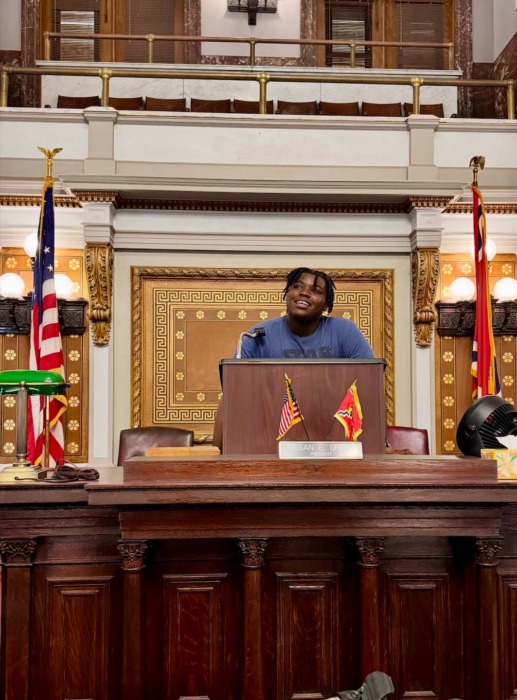
“Three months after last year’s tornado, the Civic City Fellows were invited to City Hall to formally present their resolution during a mock Board of Aldermen session held by the City Youth Council.
Standing at the podium, they called on the City of St. Louis to work with public and private partners to:
- Invest in safe, peaceful neighborhoods
- Maintain and repair roads, sidewalks, and crosswalks
- Enforce safe driving and traffic-calming near schools and parks
- Make public transit free, safe, reliable, and youth-centered
- Plant and expand green spaces and tree canopy
- Promote clean streets and eco-friendly neighborhood practices
- Ensure affordable and accessible health care
- Prioritize in-school mental health support
- Support local urban farms and fully fund school meals
- Expand after-school programming and youth workforce pathways
- Reclaim vacant lots for housing and community-centered development
- Respect and compensate essential workers fairly
- Guarantee equitable, trauma-informed emergency response
- Provide first aid and emergency preparedness training
- Ensure universal access to affordable high-speed internet and technology
This wasn’t just symbolic. These young people stood in a chamber designed for governing and lawmaking, and they shared their own blueprint for rebuilding the city.
The question now is, will we match their clarity with action?”
Sara Bannoura, Co-Founder, Civic City
“I found out the Board of Aldermen passed an ordinance to create a St. Louis City Youth Council back in 2022. It was actually one of the last bills that BOA President Megan Green drafted as an alderwoman before becoming Board President. When I connected with the team facilitating it, they told me there simply isn’t enough youth civic programming in the city, and they were excited to hear about our fellowship. So they invited us to meet the Youth Council and attend a mock Board of Aldermen meeting. Students got to see young people leading civic conversations, shaping agendas, and occupying spaces many of them had never imagined themselves in before. We showed them that City Hall is not somewhere they have to watch from a distance. They belong there, too.”
Sara Bannoura, Co-Founder, Civic City
***
“It feels good to be the first one in my family to be in the main chamber of the City of St. Louis Board of Aldermen. A lot of my family members have seen that room on TV, and when they saw that I was there, I felt like they were so proud of me. What an honor.”
-Marvin, Civic City Fellows
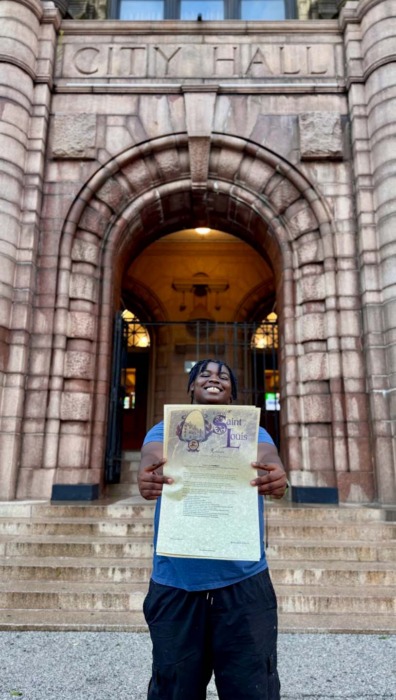
“For every fellow, it was their first time inside City Hall. They toured the building, sat in the main chamber, stood at the podium, and read their resolution into the public record. Then they watched it pass. What started as conversations, personal stories, and Post-it notes in a classroom became an official document preserved in the city’s archives.
Watching them in that room, looking up at the dais, and speaking into the microphone was so powerful. I could see how being there made them feel like the city is theirs, too. That policymaking isn’t reserved for someone else. That civic spaces are not off-limits. That their lived experiences, research, and ideas can help shape decisions that affect their neighborhoods and futures.
Policy isn’t distant. It’s not abstract, and it’s not untouchable. It’s for all of us.”
Sara Bannoura, Co-Founder, Civic City
How did the tornado factor into the first Civic City Fellows cohort?
“Many of us, including young people, don’t know how we can be part of a solution. Our youth got to see that, especially in the midst of a crisis. The tornado changed the direction of our original plan, but it also made the purpose of the program even clearer. Some of the kids’ homes were hit by the tornado, or their families were impacted. At that moment, we decided to pivot. The focus was immediate, local, and deeply human. The Fellows started learning how systems work, how to ask better questions, and how to advocate for their communities. And the tornado became the lens through which they applied those tools. It gave them a real moment to exercise ownership and voice.
Usually, really smart kids get to do stuff like this. We said, ‘Give us your really brave kids.’ And we watched them come out of their shells over those two weeks.
At Civic City, we’re trying to create opportunities that go beyond busy work or traditional youth jobs. A lot of times, youth get paid internships and then wind up somewhere like White Castle. And it’s like, okay. But we believe young people deserve opportunities that help them build confidence, creativity, leadership, and real-world skills. Storytelling. Problem-solving. Technology. Public speaking. Research. Things that help them understand they can make a change. If we give them the tools, language, and skills, it’s all possible.
One of our partners and Food City board members, Braden, secured 29 computers that we were able to provide to our youth. What surprised me was learning how many young people in our city still lack access to computers. Access to technology is no longer a luxury — it’s essential for education, career readiness, and civic participation. This is a challenge that must be addressed to ensure every young person has the tools they need to succeed.”
Darren Jackson, Co-Founder, Civic City
“Another part of the strategy behind bringing young people together and committing to support them is helping them build ownership to say to people in power, ‘This is what I want.’ I was there when Ferguson happened. And the number one thing people would ask our generation was, ‘Well, what do you all want?’ We were like, ‘JUSTICE!’ But what does justice look like? I didn’t have the language back then. Now ask our youth what they want, and it’s still justice. So, what does justice look like? It looks like this 16-part strategy, fleshed out into a research-based resolution that they proposed. Every recommendation in their final resolution was shaped by their own experiences, informed by data they collected, strengthened through peer feedback, and grounded in the realities of their neighborhoods. Rather than offering abstract change, our Fellows proposed clear, actionable, and aligned solutions. Their work is already offering a model for how young people can help shape the systems that define their future.”
Darren Jackson, Co-Founder, Civic City
What were the students most amazed about from participating in Civic City Fellows?
“How much power lies in what they already carry. A lot of students came in thinking civic life was complicated language and conversations meant for somebody else. But over time, they realized their stories mattered. Their experiences mattered. What they were seeing in their schools, neighborhoods, homes, and daily lives was not random. It connected to larger systems and challenges happening across the city. And once they realized that, they started speaking differently. More confidently. More boldly. They saw that their lived experience could become advocacy, and that advocacy could actually shape conversations around policy and change.
I also think many of them were surprised by each other. Students who barely spoke at first ended up opening up, sharing personal stories, building friendships, and wanting to be part of building solutions. Some students completed the fellowship feeling hopeful. Some were still skeptical. And honestly, that matters too. Hope is not something we can demand from young people while ignoring what they’re living through. If we want hopeful youth, we have to help build hopeful conditions.
But by the end of the Fellowship, they knew something they didn’t know before — their voice belongs in the conversation.”
Sara Bannoura, Co-Founder, Civic City