Following in the Footsteps
Run by the Premachandra family, Dances of India, one of the oldest classical Indian dance companies in the U.S., combines movement and storytelling to wow St. Louis audiences.
Nearly all her life, as far back as she can remember, Nartana Premachandra has been dancing — learning and sharing the tradition of classical Indian dance that has been passed down from her parents and their ancestors — an art form that dates back some 2,000 years.
“It was created at a time when most of the knowledge of the legends and histories of India were passed on orally, mostly by men,” Nartana says. “The gestures, the body, the eyes, the eyebrows — more than anything, it’s a vehicle for storytelling. It was created to involve everyone, with the idea being that maybe you cannot read a myth, but if you see it in front of you, you see it come alive.”
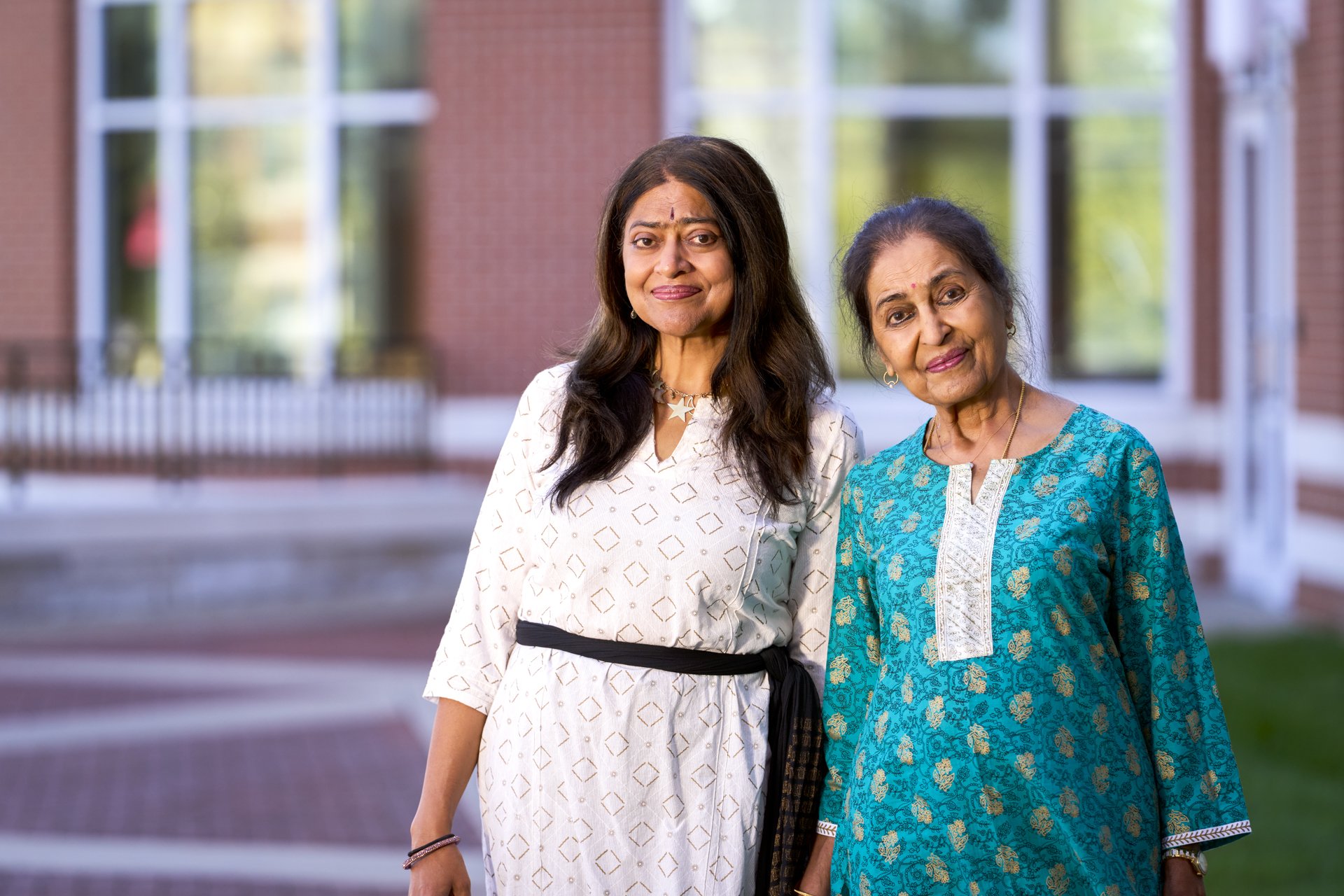
When she began dancing under the tutelage of her mother, Asha Prem, at age 5, Nartana never dreamed she would someday lead Dances of India, the dance company her parents started together nearly 50 years ago and one of the oldest classical Indian dance companies in the U.S. She took over as President in 2014 after the unexpected passing of her father, Dr. B.N. Premachandra.
Building a Family Legacy
In 1976, there was not wide knowledge of Indian culture and dance in St. Louis. Dr. Premachandra was a research scientist specializing in endocrinology, spending his days in the lab, but he had a passion for music and dance from both Eastern and Western cultures. His wife, Asha Prem, was a trained Bharata Natyam classical Indian dancer who taught classes at WashU as well as privately, in the basement of the family’s Ladue home.
“People in the beginning did not accept it because they didn’t know what it was. So, gradually we had to push ourselves to (make) them understand,” Asha Prem says of that time.
As class sizes grew bigger, Asha Prem started renting a space at Dimensions Dance Center in Olivette, where she remains to this day. She has taught students of all ages from all over the world and from all backgrounds in the studio as well as at WashU and at Stephens College in Columbia, where she had a residency.
“I feel very satisfied that I came to this level, to teach and to meet so many different kinds of people,” she says.
As the art form began gaining momentum in St. Louis, Asha Prem and Dr. Premachandra decided to officially start their classical Indian dance company, calling it Dances of India to make it accessible and distinguish it from Native American art.
“Classical Indian dance companies usually have a Sanskrit name, but my dad really wanted to make this art available for everyone, not just the Indian community. That was really important to him,” Nartana says.
Over the years, Dances of India has received consistent funding from the Missouri Arts Council, Regional Arts Commission of St. Louis, Mid-America Arts Alliance, and National Endowment for the Arts.
In addition to co-founding Dances of India, at an age when most people begin to consider retiring, Dr. Premachandra started the St. Louis Dance Festival, which ran from 2000 to 2018, bringing together dance companies and dancers from across the St. Louis region, including Saint Louis Ballet, MADCO, Leverage Dance Theater, Dimensions Dance Center, Aalim Belly Dance St. Louis, the St. Louis Strutters, Viva Flamenco, and many more.
Bringing Stories to Life
Growing up in Dances of India, Nartana performed in nearly all of the company’s annual productions, except for the years she was abroad and in graduate school in London. After returning to St. Louis, she spent several years working at a Borders bookstore and began writing novels and essays. Today, she brings her writing background to Dances of India by writing and narrating an original dance theater production that makes up the second half of the company’s annual performance in November.
“We take months to write and we bring a lot of the mythology to life, but we like to make it very accessible and relevant to people today,” she says.
This year’s dance-theater production is titled “Nine Jewels: Art, Splendor, and Music in the court of Akbar the Great, Renaissance Emperor of India,” with actor and dancer Isaiah Di Lorenzo playing the role of Akbar the Great. Akbar was a 16th-century king known for his deep love of music, art, dance, and literature, as well as his deep curiosity and openness about the universe.
“I was always fascinated by him even as a kid, because, in his court, not only did all the arts flourish, but he invited philosophers of all different religious traditions to come to his palace of philosophy,” says Nartana of her inspiration for the piece. “I thought, nowadays, things are becoming so tribal. It’s great to learn about how 500 years ago he was inviting people from all over the world to talk about the universe.”
The 2025 production runs November 14 to 16 at The Skip Viragh Center for the Arts on the Chaminade College Prep campus. The first half of the show is composed of classical Indian dance, along with some experimental dance and guest artists: Kiran James, a dancer born in St. Louis and now Chicago-based, will perform traditional Bharata Natyam, while Patrick Suzeau, Professor Emeritus of Dance at the University of Kansas, will perform a contemporary and Indian dance piece. St. Louis-based choreographer and dancer Thomas Proctor will also perform an experimental piece as well as perform in the dance-theater production.
Theckla Mehta has been with the company for 48 years and works closely with Nartana to choreograph each dance-theater production. Asha Prem’s second-ever dance student, Mehta was first exposed to classical Indian dance while attending an Indian festival with her husband, Raju Mehta.
“The thing that compelled me is that it’s such a complete art form in the sense that your eyes tell what your heart is thinking. Your face tells the emotions; your hands tell the story; your feet tell the rhythm,” she says. “It was just such a lure to me, plus the music inspired me. As soon as I saw it, I knew I wanted to do it.”
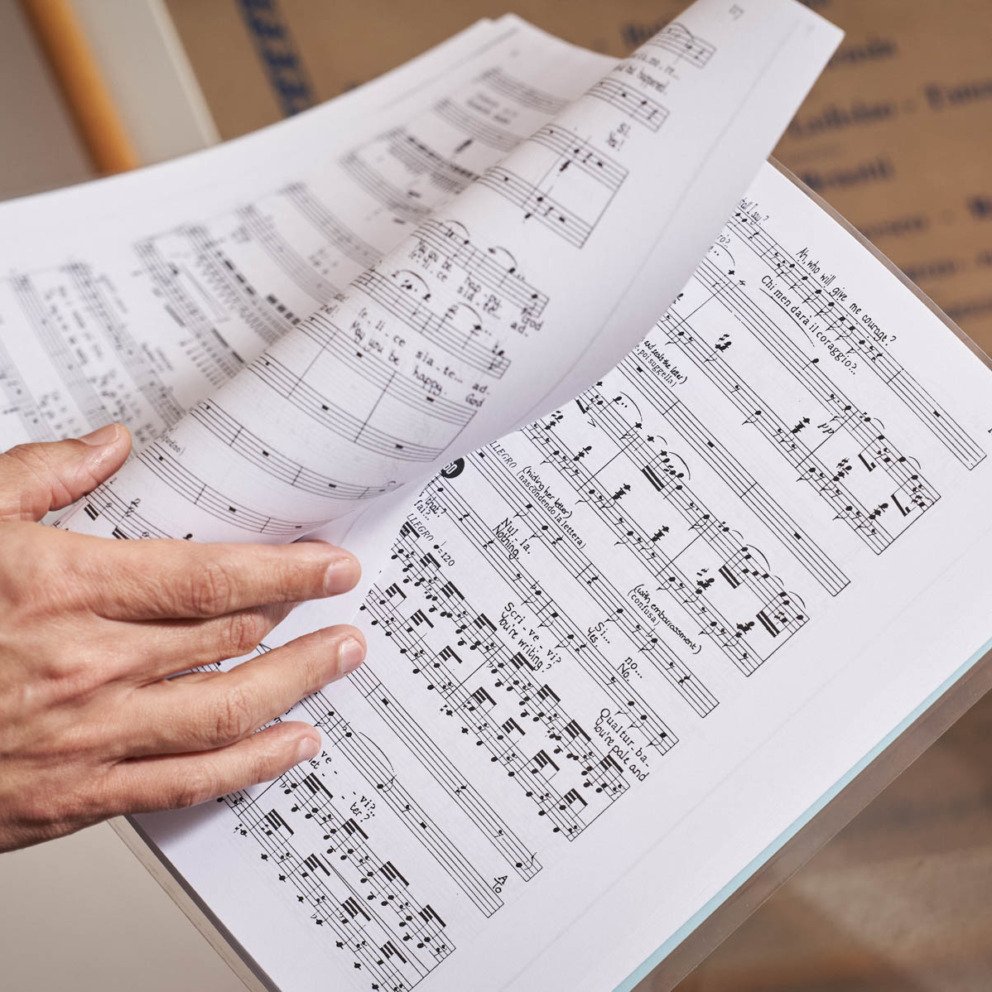
Once Nartana has written the story concept for the dance-theater piece, Mehta comes in and they review it together to identify which parts of the story will work best with choreography. Once the story is edited, they start looking for music.
“As the choreographer, I have to have that music say something to me before I can make it work,” Mehta says. “Then we go back and edit the script so it fits the beats of the music. You have to have the choreography working with the music and the narration. I have such a strong vision in my head of what I want it to look like.”
Growing a Community
Carrying on the family tradition, Mehta’s daughter, Devyani Hunt, and her 16-year-old granddaughter, Milana Hunt, also dance with the company and even performed a dance together during Dances of India’s 45th season in 2021. Milana started dancing in the seventh grade and is now a member of the company’s high school dance group.
“Everything is choreographed — your eyes, your eyebrows, hands, feet, your whole body. Everything is purposeful,” Milana Hunt says. “I think that’s one of the main differences about this classical style of dance compared to Western dance, and that’s why I really love it. Other athletes get into a flow state and it’s very similar to that when I’m performing. I can’t see the audience; I’m just thinking about me and the lights are on me and the music is loud, and that’s where I can thrive. I know what to do.”
More than anything, Hunt says, she loves the community and the friends she has made through dancing and Dances of India, as well as getting in touch with her Indian roots.
“I’m not fully Indian, so I’ve had a lot of moments where I don’t know if I am supposed to be here or I feel like I’m a little more white than everybody else. Dance has made me feel so much more Indian — not even just learning about dance, but through making all those friends and connections, I learn about the food and the language and the dress and everything else. I just feel so much more connected to that side of my culture.”
Another dancer, Ila Tailor, started taking lessons from Asha Prem in 1986 at 36 years old. Six years into her training, she did her “graduation” solo performance and now regularly performs in the classical dance portion of the company’s shows.
“It’s become more of a spiritual journey for me, not so much as to perform,” Tailor says. “I’m not a temple goer; but this is, for me, a kind of a worship. “When I go on the stage, I don’t think of the audience at all. I’m dancing for myself.”
In addition to bringing joy to St. Louis audiences through its annual performances, Dances of India continues to offer regular classes to children and adults at all skill levels, as well as engaging the community through workshops, talks, storytelling and performances in schools, museums, libraries, and other public spaces throughout the region. The company has worked with the Saint Louis Art Museum, Missouri History Museum, and the Urban League of St. Louis, just to name a few.
The company not only invites the community in, but also serves as a warm welcome to St. Louis for many of its members. Vaidehi Rajagopalan moved from New York to St. Louis in 1985, the same year her son, Kiran, was born; over the years, both mother and son found a creative outlet and community through Dances of India. Asha Prem was Kiran’s first dance teacher, and he is now a professional dancer in his own right who will perform alongside his mother in the company’s November 2025 production.
“I’ve seen Asha Prem’s professionalism and the way she shares knowledge, and that was very important because as an adult coming back to dance — and I’m a psychologist, so I was busy, and with two young kids — and she appreciated every bit of that in me,” Vaidehi Rajagopalan says. “I tell people, ‘We have a lot to learn from Asha Prem. She brings pleasure into the practice of dance.’”
For Nartana, creating art and community also means carrying on her dad’s legacy, which has been a rewarding, if unexpected, experience.
“It means a lot because I think it helps keep the classical Indian dance alive in St. Louis and his vision alive,” she says. “He was very involved with the local arts community and he really wanted it to be seen on par with any other classical art. He didn’t want it to be just this cultural relic. He wanted to be alive and for everyone. St. Louis has been so welcoming. We have to keep introducing this to people over and over because they just don’t know, but they have been incredibly welcoming.”
Join the Story
- Learn more about Dances of India and buy tickets to its November show on its website.
- Connect with Dances of India on Instagram.
- See Dances of India in action in our YouTube Shorts video.
- Explore more STLMade stories about our local arts and culture scene.