Fill Your Cup
With a focus on ethical sourcing and high-quality beans, Goshen Coffee Roasters in Edwardsville, Illinois, helmed by the Beard and Hughey families, serves up delicious coffee here and across the U.S.
When Tony Auger wants to do a little quality control, he orders an espresso shot of Goshen Coffee Roasters’ Bona Fide house blend. As Goshen’s Chief Coffee Officer, this happens often.
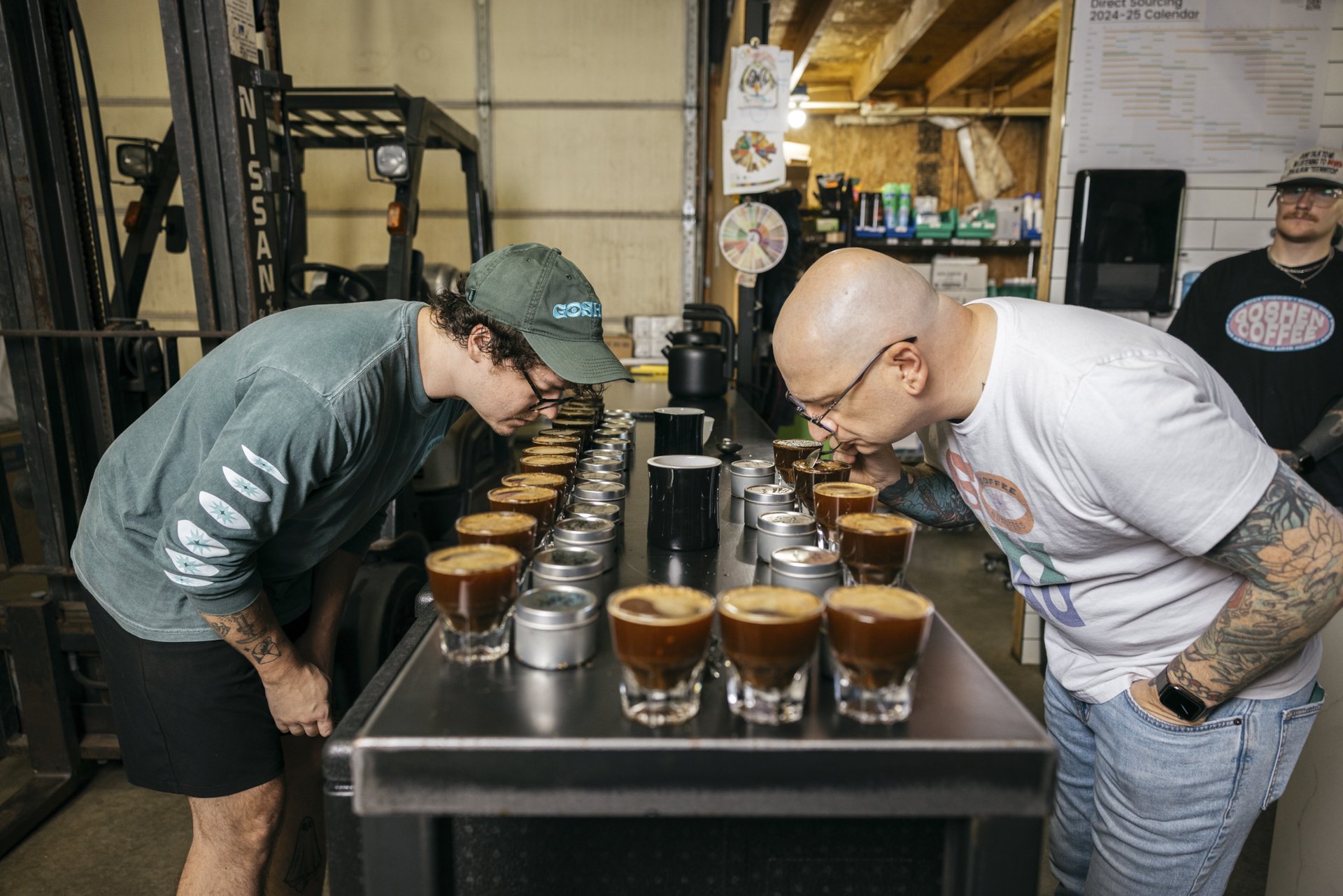
“I always want to come in and make sure our Bona Fide espresso tastes exactly how it’s supposed to taste: nice milk chocolate, a little bit of fruitiness to it, but super sweet and balanced,” he says. “That, to me, is like how an espresso should taste.”
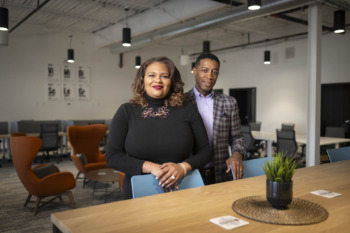
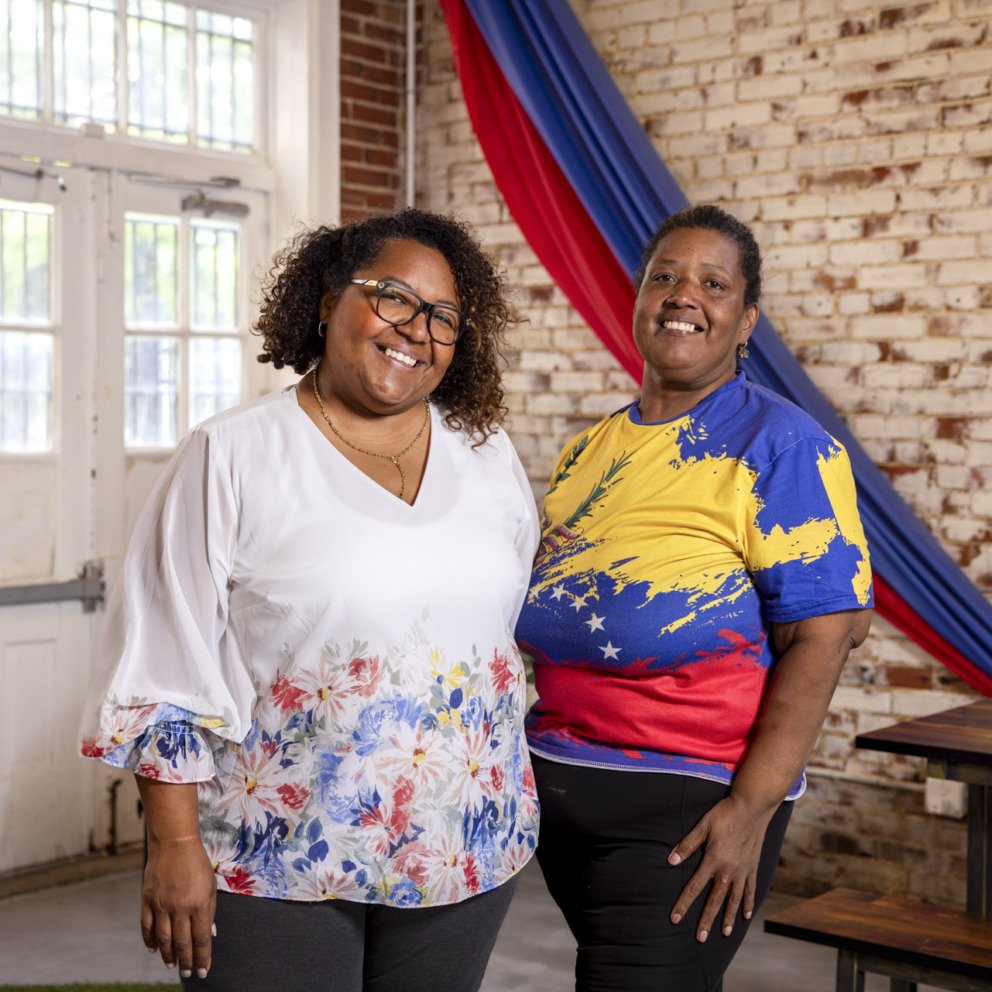
Auger joined the Edwardsville, Illinois-based coffee roaster in 2019 during a larger shift for the brand. Originally founded by Matt Herren in 2002, Goshen was purchased by local real estate investor Jay Beard, along with his wife, Julie, in 2013. Later, they brought on Julie’s sister Jennifer Hughey as CEO, and her husband, Mike, as head of cafe operations. Beard approached Hughey, who had worked in the consumer products industry in Chicago for many years, to help grow Goshen and expand its offerings both across the region and on a national scale, in all aspects of the business: wholesale, grocery, online sales, and physical locations.
As with many businesses, the 2020 global health crisis slowed things down a bit, but Goshen was able to implement phase one of its new era in August 2020 when it opened its first cafe in Edwardsville. Another cafe in St. Louis’ Soulard neighborhood was next, debuting in 2022, followed by a third in Glen Carbon, Illinois, in 2025.
The newest cafe is bright and airy, with a cheery blue bar, sleek wood furniture, and blue and white checkerboard tiling. In addition to full coffee menus, Goshen cafes also offer housemade breakfast and brunch dishes. Favorites include Fancy Avocado Toast topped with pickled red onion, carrot, radish, and chili flakes; the Egg Sammy with Gouda and mixed greens; and the Goshen Burrito with scrambled egg, potato, onion, black beans, roasted peppers, and cheese. There’s even a drive-thru window so you can grab seasonal lattes like the Autumn Joy, with coconut, chocolate, and espresso, on the go.
Hughey’s vision for a brick-and-mortar presence doesn’t end there.
“Illinois was obviously just a given for us, and Soulard has been a really great location for us to highlight what we do and help people know more about Goshen,” she says. “We’re not just a brand that’s (only) in grocery; it really has helped us to highlight all the things that we’re doing and the great quality that we have. We will definitely continue to expand in the St. Louis metro and throughout Missouri.”
Part of the ethos behind Goshen’s cafes is its in-depth training for baristas. You can expect to get the same high-quality pour no matter who is working or which location you visit.
“It’s so important for our baristas to understand where this coffee comes from and to really reflect on the quality that they get to drink every day,” Auger says. “We make sure they are trained all the time to taste the tiniest difference in espresso. People train to first be able to batch brew, and then they get to learn how to make pour-overs, to steam milk properly, to pull espresso shots the right way. Our goal is to make sure that all the coffee is continuously at its highest quality.”
Phase two kicked off in 2021, when Auger convinced Hughey it was time for a rebrand. After months and tens of thousands of dollars spent with an out-of-town marketing agency, the team realized it just wasn’t Goshen. They pivoted and partnered with local firm TOKY, which immediately understood what the new iteration should be.
Although the name “Goshen” is likely familiar to those who grew up in Southern Illinois, Hughey and Auger found that it was confusing to customers elsewhere. The company moniker comes from the early nineteenth-century Goshen Settlement, the original name for what is now Edwardsville, referring to a biblical term for a land of plenty. Many businesses in the area use the name Goshen, and there’s also a Goshen, Illinois, and a Goshen, Indiana, adding to the confusion. With the rebrand, St. Louis agency TOKY pitched the idea of Goshen standing for “Good Shit Energy.”
“Goshen is a regional thing, and people around this area know that it means Edwardsville, but the minute we go into St. Louis, people aren’t even pronouncing the name right,” Auger says. “For us, it was just so important to figure out something that is super approachable, but also means the core of what we’re trying to accomplish.”
Hughey adds: “When they came up with that, it incorporated everything we had been talking about, and it just was like, ‘Oh my God, of course, that’s what it should be.’”
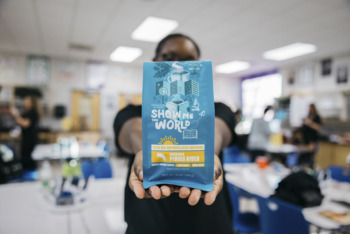
To that end, the award-winning updated branding features bold, bright colors, and a stylized North Star, which TOKY says symbolizes “the unapologetic and positive vibe of the new brand.” For Auger, this includes ensuring a consistent, delicious roast. Among other things, that’s why he makes sure 95% of the beans Goshen uses are sourced from small-scale coffee producers.
“One of the awesome parts about my job after spending 15 years in coffee is making relationships,” Auger says. “This is really important to us, because most of the world’s coffee is grown by small-scale producers. One of the things I’m super passionate about is that a lot of these coffee growers really aren’t able to make ends meet at the end of the day. Part of ‘good shit energy’ is going back to, ‘How do we make an impact wherever we are?’ I think of that a lot of times when it comes to sourcing our coffee.”
He adds: “We can source fantastic coffee, but if we’re paying a wage to coffee growers that’s just enough to get by, but not enough to reinvest in themselves and their own businesses, then it’s not a sustainable approach, and it’s not something I can get behind.”
Auger takes sourcing trips often, and he’s headed to the Pitalito region of Colombia this fall, where he will sample beans that he might decide to use for Goshen’s Old School Tattoo blend, or he might find one of an even higher quality that can be roasted for the single-origin Colombia La Pelota, or something truly exceptional that he’ll roast for the limited-share Secret Stash. After this, the coffee starts to make the long journey to Edwardsville: Auger estimates that there are as many as 20 touchpoints to get the coffee beans to the roastery, so it’s imperative that each person along the supply chain is just as passionate as he is.
“If they’re not super passionate about coffee, that’s where quality can start degrading. We have to be positive that we’re always working with people that care about coffee just as much as we do,” he says.
Hughey — whose current coffee obsession, by the way, is a cortado with oat milk — points to the solid foundation of delicious roasting that founder Matt Herren laid for them as the basis for the changes and improvements the team has made in the past five years. One example is the upgraded Loring roaster that allows Auger and his team both greater flexibility but also sustainable, replicable roasts. Auger and Hughey saw other roasters struggling with consistency because they have to constantly find new coffee sources as well as deal with machine problems, fluctuations in outdoor temperature, or moisture that can change the flavor of a roast.
“For us it’s important to make that supply chain super consistent, and also having a machine that could do the exact same thing (every time),” Auger says. “The cool thing is it allowed us to be able to roast anywhere between 18 pounds all the way up to 72 pounds, where previously, 40 pounds was all we could roast. (Now) we can find these really high-end, nice coffees and do smaller roast sizes, while also keeping up with production for larger-scale grocery orders.”
Hughey says sourcing single-origin coffees has become more difficult lately due to recent tariffs, but Goshen has tried not to pass that cost onto the consumer as much as possible; for now, it just means less single-origin Brazilian offerings. Although navigating these changes hasn’t been easy, Auger and Hughey remain optimistic about the industry and Goshen’s place within it, both locally and nationally.
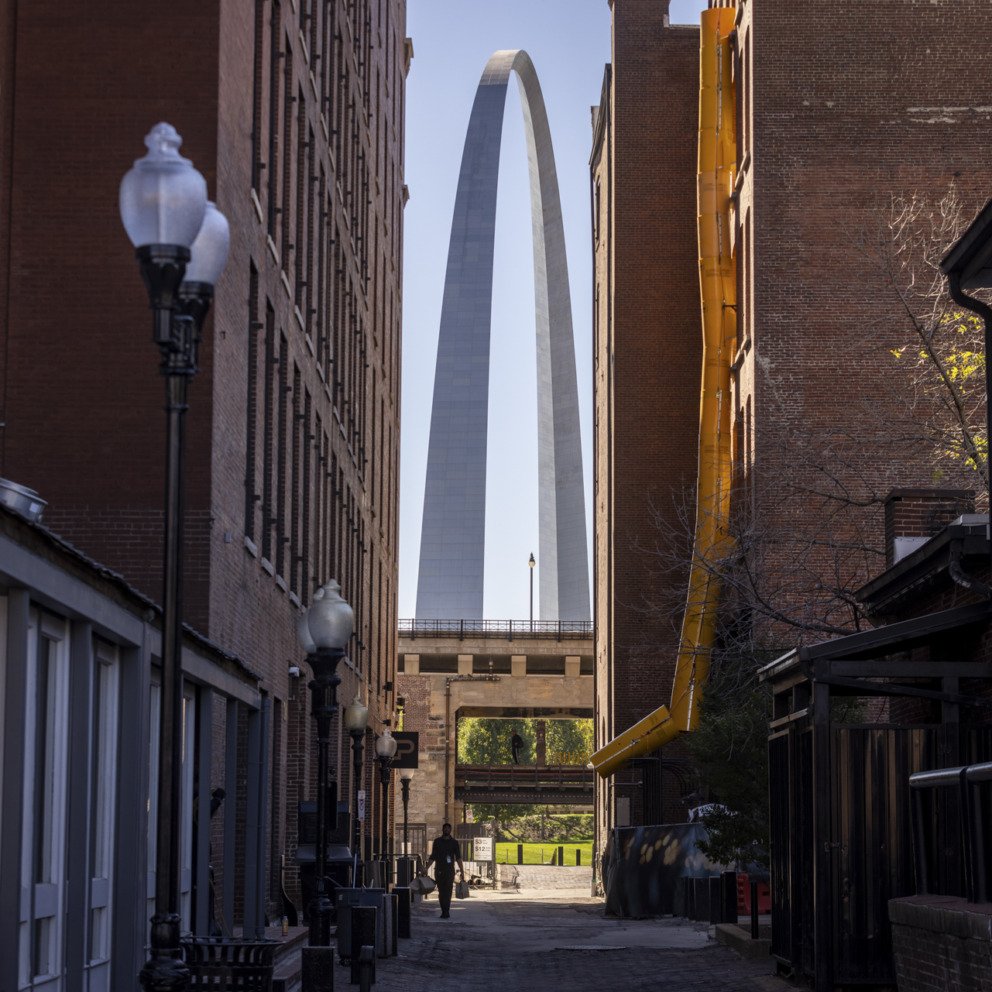
Auger, who previously lived in Boston, and Hughey and her husband, who returned from many years in Chicago to join Goshen, have both found that the St. Louis area is a great place for coffee due to the region’s agricultural ties as well as its food and drink community.
“It’s a really unique area in that there are a lot of coffee geeks like myself, where I’m super into something that’s unique tasting and has a lot of acidity or brightness, flavor, and fruitiness. But there’s also people in this area who are good old-fashioned farmers that want a delicious cup of coffee,” Auger says. “I think the main reason why Goshen works so well here is because people really care about what something tastes like, even if they don’t always have the words to describe a specific tasting note, but when they take a sip, they can tell if something was passionately made and cared about. St. Louis is really good about giving that spark to people when it comes to not just coffee, but a lot of different food and sensory things.”
As for the future, the Goshen team plans to open more cafes, and recently struck a distribution deal with the national boho-chic chain Anthropologie — but most importantly, they want to make an ever-better cup of coffee.
“Goshen had been around for a long time when we came on board,” Hughey says. “We enhanced the coffee that was already here and made sure that it is consistent every day we roast that coffee. It’s important to us to make sure that the taste that somebody had today of Bona Fide was the same flavor notes that they have in two months, two years — or even better than what they had today. We want the next cup of coffee to be even better than the last one.”
Join the Story
- Learn more about Goshen Coffee Roasters on its website.
- Connect with Goshen Coffee Roasters on Instagram and Facebook.
- Shop for Goshen coffee in its online store or sign up for a coffee subscription.
- Check out more STLMade stories on other local culinary entrepreneurs: