Bridging a Divide
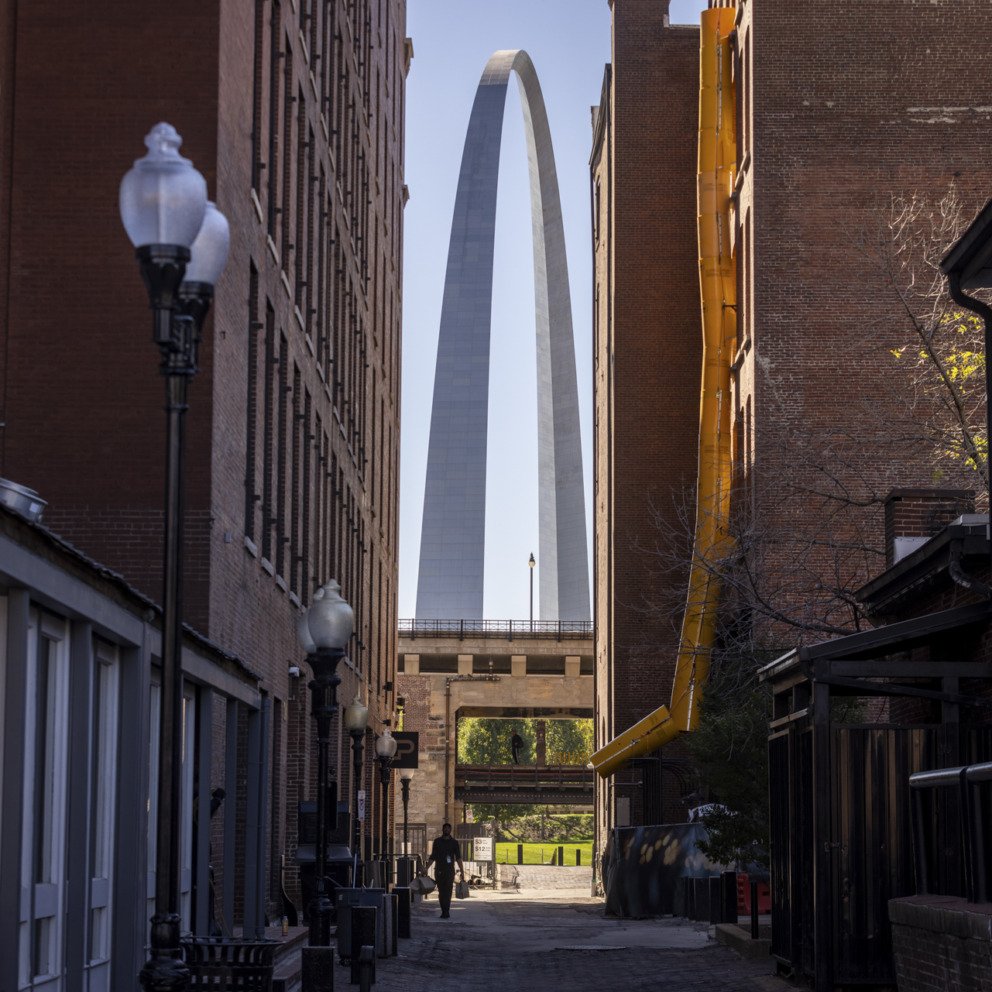
In the growing Delmar Maker District and beyond, restaurants, maker and retail spaces, and nonprofits are thriving, ushering in a new era for the neighborhood.
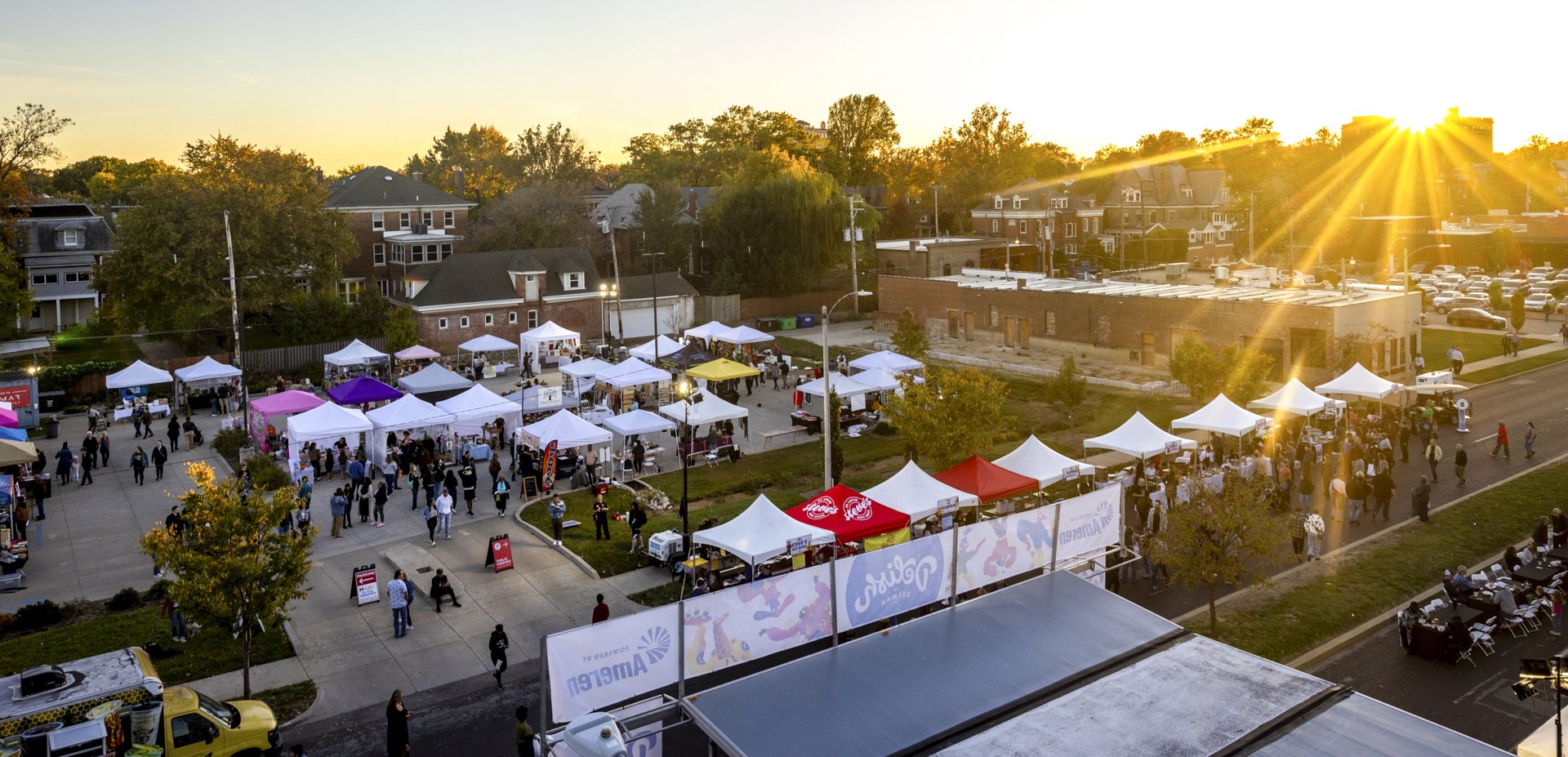
It’s a Friday night on Delmar Boulevard in St. Louis, and shoppers stroll among booths at the maker’s market, eyeing crocheted sheep stuffies; handmade soaps; and oversized, metal flowers bursting with color.
They line up for pickle martinis at the Deli Divine booth, cauliflower nuggets at the Beyond Sweet Kitchen + Bar booth, homemade chocolate chip pumpkin bread from The Fountain on Delmar booth.
They sit at tables lined end to end along the middle of Delmar, drinking together, laughing together, breaking apart empanadas together in what looks like an early community Thanksgiving.
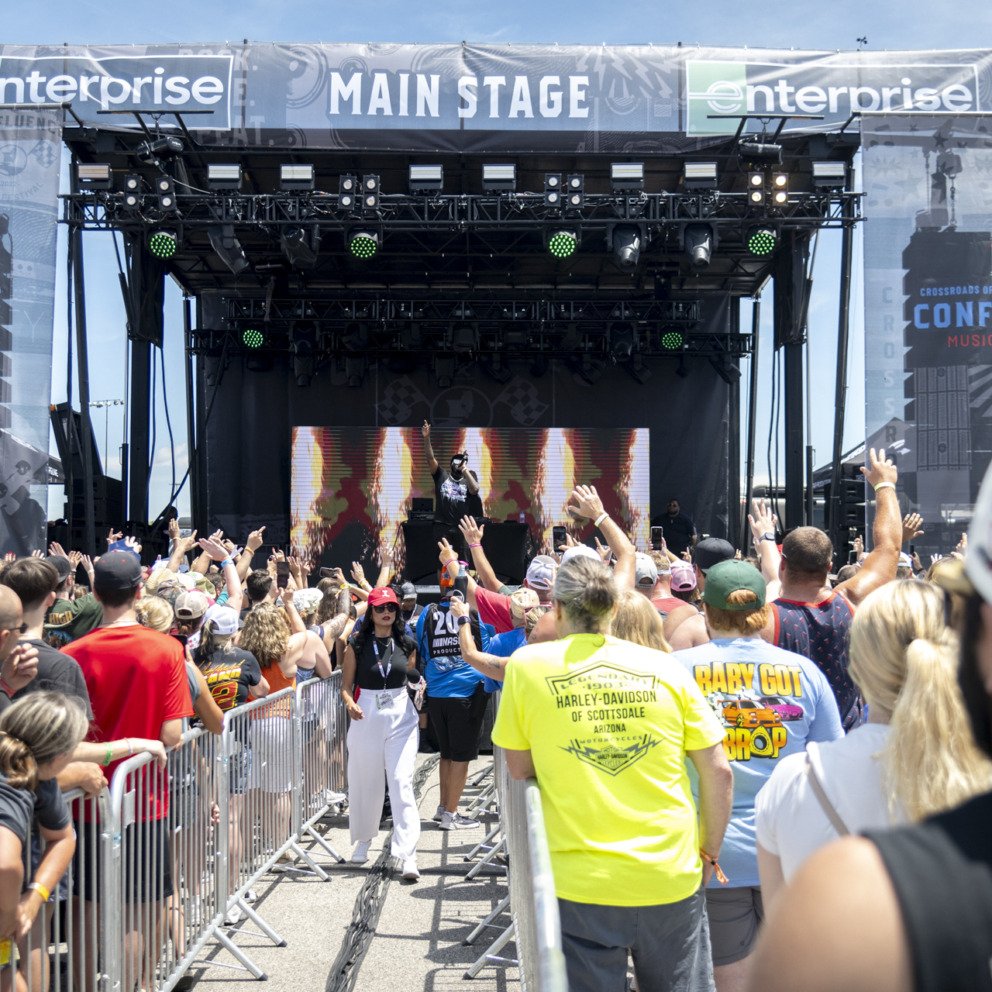
“I know this is a good event, but we’ve got to get this line dance started, is that all right?” a female singer calls out from the stage.
Within minutes, people rise from the tables and emerge from the crowds. The music regains its rhythm; the people dance in sync.
This is Delish on Delmar, a festival celebrating all that’s new, fun, innovative, and delicious along Delmar Boulevard in St. Louis: specifically in the Delmar Maker District between Union and Kingshighway boulevards, and the areas beyond.
The Delmar DivINe, a nonprofit hub and community space, opened just east of here in late 2022, between Union and DeBaliviere Avenue. It houses Deli Divine, the place serving up reubens and pickle martinis at the street festival.
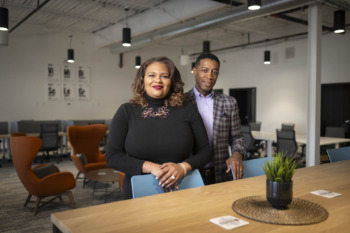
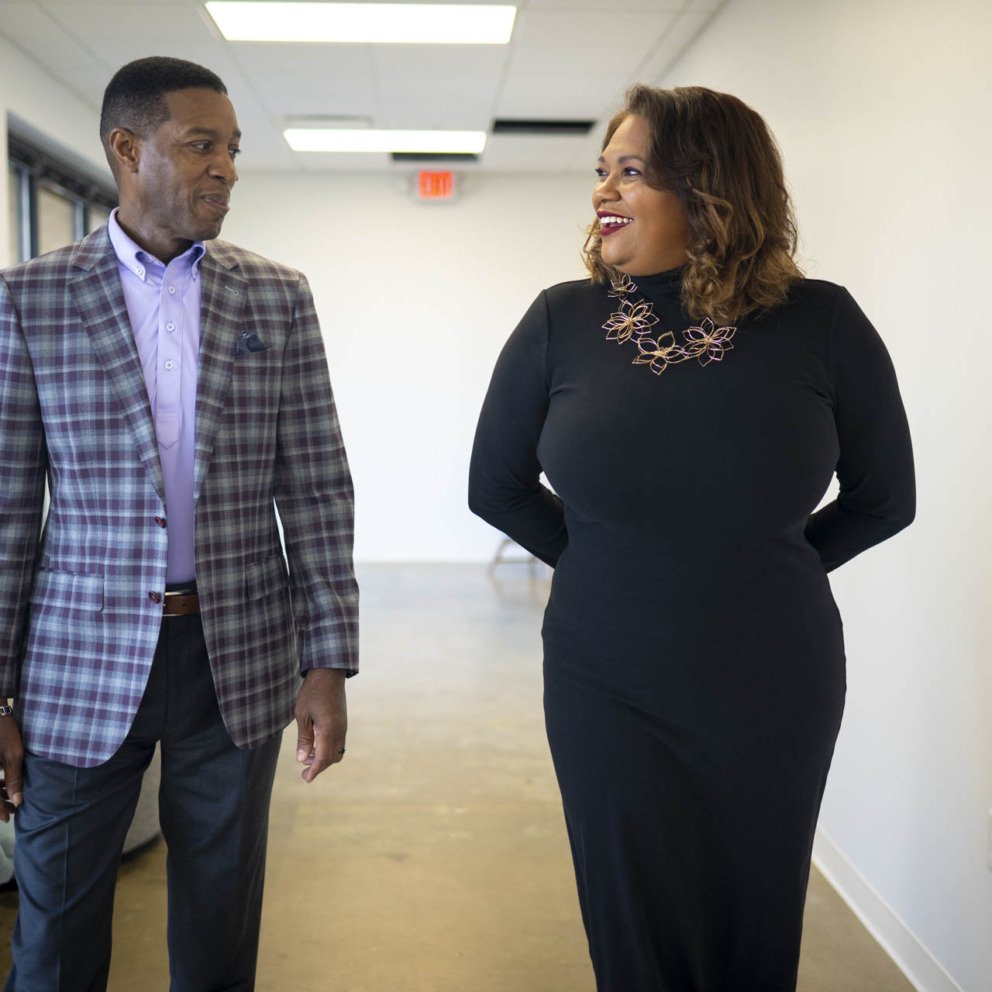
Maxine Clark, the founder of St. Louis-based Build-A-Bear Workshop, is the developer of the Delmar DivINe, the brains behind Delish on Delmar, and friends with many business owners along and near the stretch, who she also collaborates with on neighborhood projects.
“The willingness of people to come together, to collaborate, has been a very pleasant surprise,” says Clark, who sees herself as a connector of people. “And so I think that space and place are important so that people feel welcome. It’s in their neighborhood, so to speak.”
Starting in a Studio
This story starts around 22 years ago, when two guys just wanted to find a space to do glassblowing. Doug Auer and Jim McKelvey, who met in Auer’s glassblowing class at Washington University in St. Louis, bought a run-down 1930s car dealership at 5200 Delmar Boulevard. They opened Third Degree Glass Factory, where they wanted to build a community of glass artists who would share their passion and creations with others.
To get people in the door, they established Third Friday open house events with demonstrations, music, and food offerings.
In 2009, McKelvey co-founded Square, Inc. with St. Louisan Jack Dorsey. And Third Degree Glass Factory, which McKelvey funded and Auer ran (“We literally tell people he paid for it and I built it,” Auer says), had grown and established itself as a maker and entertainment destination.
One day around 2016, McKelvey suggested to Auer that they buy pieces of vacant land that surrounded their studio. What if they brought in dining, shops, and other things for people to experience?
“So that was the idea,” Auer recalls. “It was literally a five-minute conversation. I initially said, ‘I don’t have time for that.’ And then about a minute later I said, ‘You know, what the heck? Let’s give this a try.’”
Meanwhile, people continue to pack the glass factory’s Third Friday events. The recent Delish on Delmar, held the third Friday in October 2024, leveled up the celebration.
‘Part of Something Bigger’
As Auer and McKelvey started to buy property, the old St. Luke’s Hospital complex just west of Union had been sitting vacant for a few years. Clark was working to secure funding to redevelop it.
She had been the board chair of KIPP St. Louis schools and opened nearby Kipp Victory Academy for elementary students in 2014. Driving through the neighborhood, she noticed people nailing up a for sale sign on the hospital complex, she says.
“Right before KIPP opened, Michael Brown was killed in Ferguson,” she says. “It gave me this whole new way to look at the challenges that we have in St. Louis. It was just in my brain. I didn’t say, ‘I’m gonna open up the Delmar DivINe.’ Then I said, ‘We’ve got to do better for these kids.’”
Momentum was building. Clark knew Auer and McKelvey were developing land nearby. She knew St. Louis ArtWorks, which provides art education and job training to teens, opened in 2016. Other projects like the Everly on the Loop apartments and the Loop Trolley Barn also opened.
In late 2022, the 310,000-square-foot Delmar DivINe opened as a hub with 150 apartments, space for 33 nonprofit tenants, and retail storefronts, including the deli, a bank, a pharmacy, an urgent care, and an Edward Jones office.
The nonprofit space, which is full, includes educational, health, and community groups. Many didn’t know the others existed before, and now, they work with one another because they can meet easily under the same roof.
About 870 people have a badge to the building, Clark says, and about 1,000 people come and go on most days. Hanging in the hallways are decorated pieces of plywood that once covered windows broken at businesses during the Ferguson protests.
Washington University holds classes here to teach new immigrants English and to show them how to get around the city.
“It’s wonderful,” Clark says. “It’s a central place for people to get to.”
Clark, who is always thinking about how to brand and rebrand things, thought hard about what to name the project. The term Delmar Divide became infamous after the BBC produced a short documentary in 2012 outlining the street as a socioeconomic and racial dividing line in St. Louis.
“I really was literally looking at the word,” Clark says. “I was thinking: What else could we call this? I needed a working title for all my proposals that I was doing, and it just jumped out at me to take out the D and make it an N.”
The “in” in “DivINe” stands for investment, innovation, inspiration, and inclusion, Clark says.
“And we use it a lot. We play on it a lot. The ‘in’ is really important to us because it means you’re in. If you’re here, you’re safe, you’re included, you’re part of something bigger than you,” she says.
In spring 2025, construction will start on a second phase of Delmar DivINe and is expected to be completed in 2026. It will include about 80 more apartments and about 20,000 square feet of office space.
Making More
Meanwhile, just east of Delmar DivINe, the Maker District continued to develop.
In 2018, Auer and McKelvey opened a new techshop and maker space called MADE after TechShop in the Cortex Innovation District closed the year before. MADE stands for Makers, Artists, Designers, and Entrepreneurs.
“There are no rules,” McKelvey told the crowd assembled for the grand opening. “Well, there’s a waiver.”
The crowd laughed.
Seven months later, MADE for Kids, a makerspace by the creators of The Magic House children’s museum in Kirkwood, opened on the building’s second floor. In 2020, Craft Alliance, which had made its home in the Delmar Loop since 1969, moved two miles east to a larger building close to Third Degree Glass Factory and MADE.
That further solidified the area as the Maker District.
Rachel King has worked as MADE’s membership director for about a year. And just in that time, she’s seen some big changes to the space and the neighborhood. Next door, Beyond Sweet Kitchen + Bar opened in late 2023. In September, Union Studio opened a retail shop and common room in MADE’s lobby. The space also offers books from The Novel Neighbor and breads and snacks from Union Loafers.
“So when I say I’ve seen it change, I’m talking big changes, and the community and culture has changed, too,” she says. “Not that we weren’t connected in the past, but I feel like our Maker District community has really come together for several events just in the last six months. So it’s nice.”
She loves interacting with the scores of members who use the space to learn new skills like powder coating, quilting, and screen printing. They’re also honing their craft for their own pleasure, their own business ventures, or both. It’s a friendly place where people help and teach one another, King adds.
“We see people start with a little idea, and then you see it come to fruition,” she says. “I feel like we help people’s dreams come true. It’s really, really fun to watch the makers and artists start with a small idea and then really run with it.”
Feeding Momentum
Dreamers and makers and visitors get hungry.
Clark had space at the Delmar DivINe, and she knew from an economic study performed by Washington University students that the neighborhood wanted a deli. She learned that once upon a time, the neighborhood had been home to a largely Jewish population and had lots of delis.
“Somebody told me, ‘You should meet Ben Poremba,’” she says, “He wants to do a deli. We met. And he loved it. He wanted to do it, and we partnered to do it.”
Deli Divine opened in the building in spring 2023. Poremba, one of the city’s most acclaimed chefs and restaurateurs, had toured traditional Jewish delis around the country to get the space just right. It offers classic deli sandwiches on rye or pumpernickel bread, bagels sourced from New York, and matzo ball soup that Clark enjoys.
Poremba didn’t stop. In late March, he opened Esca, a coastal Mediterranean bar and grill, in a building across the street from Craft Alliance. In June, he opened Florentin, inspired by Tel Aviv’s street foods, in the building shared with Craft Alliance.
What attracted Poremba to Delmar?
“The short answer for this is the amount of vacancies that existed that allowed me to try a project (of this scope) all at the same time, more or less,” he says. “That’s a given to be able to do that. The bigger answer is that the strip itself between Kingshighway and Union, maybe all the way out to the Delmar DivINe, for me, it does have a big city feel. It’s like a grid between west and east, north and south.”
If the stretch were activated, he figures, it can serve as a hub for other parts of the city.
“It felt like it had a life at some point that I could easily imagine here again,” he says. “So it seemed like part opportunity, part vision.”
Also coming to the district: Poremba’s Mexican restaurant Nixta this fall, and in spring 2025, his flagship restaurants Elaia and Olio. All three had been located in the Botanical Heights neighborhood and closed at the end of 2023 when the landlord increased rent and negotiations to buy the buildings fell apart.
Here on Delmar, Poremba is working with McKelvey and Auer as landlords on the properties, and is talking to them about joint ownership of others.
“There’s a lot of mutual understanding and appreciation for good craftsmanship and good finishes,” Poremba says. “There’s a lot of synergy. And I feel like there’s a good partnership, even though we’re not business partners. It does feel like we’re all going for the same thing, and that’s awesome.”
Nixta will open in a redeveloped former auto body shop complex at 5232 Delmar, just west of Craft Alliance, known as Maker’s Locale. The space is now shared by Steve’s Hot Dogs on Delmar, The Fountain on Delmar, and Alpha Brewing Company Distillery, which all opened in July.
Steve Ewing of Steve’s Hot Dogs first started selling dogs from a cart, then opened brick-and-mortar locations on The Hill and in Fox Park. Now, he serves up dogs at restaurants on South Grand, Delmar, Energizer Park (formerly known as CITYPARK), and at the end of 2024, The District in Chesterfield.
“Every neighborhood we’ve been in, every corner we go to, comes up just because (we) put that energy into it,” Ewing says. “And Doug and those guys were all about that.”
Ewing looked at Delmar and recognized its opportunity. “I saw this as a major boulevard, with lots of people on both sides,” he says. “I saw this as an opportunity to grow a new area. It’s kind of been dormant for the past few decades.”
In early 2020, Ewing partnered with friends Danni and Marcus Eickenhorst of HUSTL Hospitality Group, which took over ownership of The Fountain on Locust in 2021.
The Fountain on Delmar specializes in coffee, baked goods, ice cream, and retro cocktails and mocktails, which customers can watch getting made at the counter. Steve’s serves up his usual menu, with the counter up front so that customers can watch their hot dogs get prepared. That’s the whole idea of the Maker District, Danni Eickenhorst says, to serve up an experience rather than simply something to eat or drink.
“Our mission, our vision through HUSTL, is that we’re trying to make the St. Louis region a better place to live through our restaurants,” she says. “We’re trying to make the lives of our employees better, and we’re trying to make every neighborhood we touch better.”
Eickenhorst is working to establish a formal nonprofit business district and is moving forward in the establishment of a Community Improvement District. And, like other business owners, she’s established a calendar of events to attract customers.
She’s also become close with Clark. “There’s so many great minds in St. Louis, so I feel so fortunate that we’re here with Maxine,” she says. “She’s got such vision and connections that if she has an idea, it’s probably gonna happen.”
Events like Delish on Delmar, which Clark and business owners saw as very successful, will only draw more people to see the Delmar Maker District as the next food destination in St. Louis, Eickenhorst says.
Eickenhorst adds that before committing to moving to the district, they walked through the neighborhood, attended community meetings, and got to know residents and business owners.
“It really felt like they wanted it,” she recalls. “It felt like they would support it if it was here and they wanted to see something good happening here. And so we were as inspired by that as anything. They were like: ‘It’s about time.’”