The Heart of the Arts
For four decades, the Regional Arts Commission of St. Louis has invested more than $115 million to shape and support the region’s vibrant arts community.
Throughout the summer and fall of 2024, St. Louisans began to notice colorful murals popping up all over the city — 28 to be exact, across the newly established 14 wards. Powered by the Regional Arts Commission of St. Louis, or RAC, as it’s more commonly known, the St. Louis Mural Project used funds from the American Rescue Plan Act (ARPA) to commission local artists to create the murals in an effort that RAC President and CEO Vanessa Cooksey says was “the will of the people.”
A survey done by the mayor’s office and the board of aldermen asked residents how ARPA dollars should be used, and across the board, St. Louisans said they wanted their community to be beautiful, fun, and safe. “Murals do all of those things,” Cooksey says. “It’s a through line for our past, present, and future. We asked our artists to tell a story that people can be proud of that can help elevate their mind about what St. Louis can become.”
The mural project is just one example of many in RAC’s 40 years of shaping and supporting St. Louis’ arts and culture scene as the region’s largest public funder of the arts. Over its four decades, RAC has provided nearly 7,500 grants totaling over $118 million to St. Louis artists and arts organizations. In 2025 alone, RAC awarded a total of $3.7 million in funding for arts and culture organizations and programs in St. Louis city and county.
“We have over 660 arts and culture nonprofit organizations in this region,” Cooksey says, “and these artists and arts organizations aren’t just what makes St. Louis cool, but they make St. Louis livable. They add to the fabric of our quality of life in a way that positions and makes St. Louis an arts town.”
Investing in the Arts
The origins of RAC go all the way back to 1982, when the organization’s first president and CEO, Jill McGuire, initially spearheaded an effort under then St. Louis Mayor Vincent Schoemehl to enact a five-eighth cent sales tax. The plan was to create a “Regional Convention Bureau” and allocate funding for the arts as well as economic development. The measure won in the city, but failed by a small margin in St. Louis County. Following the outcome, the community continued to submit requests to McGuire and the mayor’s office seeking funding for the local arts, particularly the St. Louis Symphony Orchestra.
Eventually a group led by McGuire devised a plan to create the Regional Arts Commission through a hotel and motel tax. The measure passed in 1985, with the city being allotted seven appointees to the inaugural RAC board and the county allotted eight. In its first year, the tax produced approximately $1.3 million for the arts.
Steve Schankman, RAC commissioner in 1985 and co-founder of Contemporary Productions, which produces concerts and festivals in the area, said the formation of RAC allowed St. Louis’ major artistic institutions to remain well-funded. Since its founding, RAC has grown to support the work of numerous individual artists, organizations, and projects across the region.
Rebuilding the Future
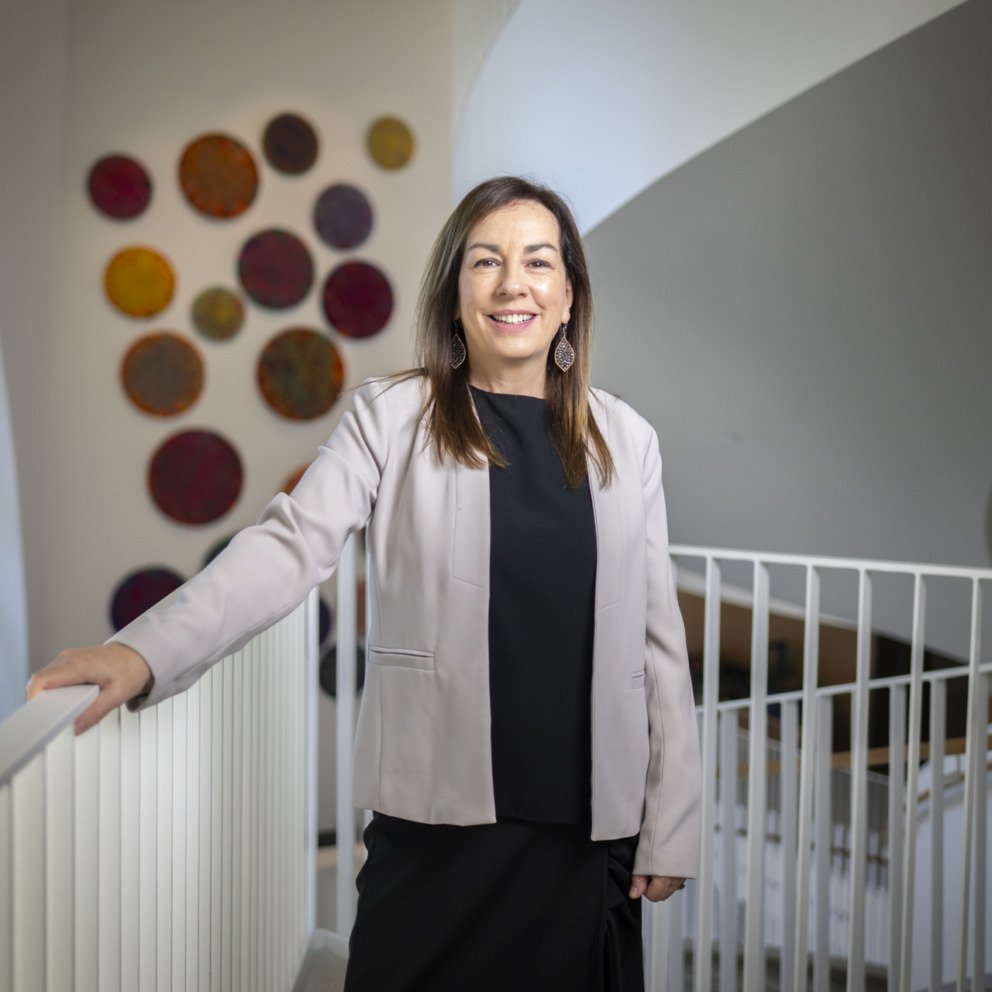
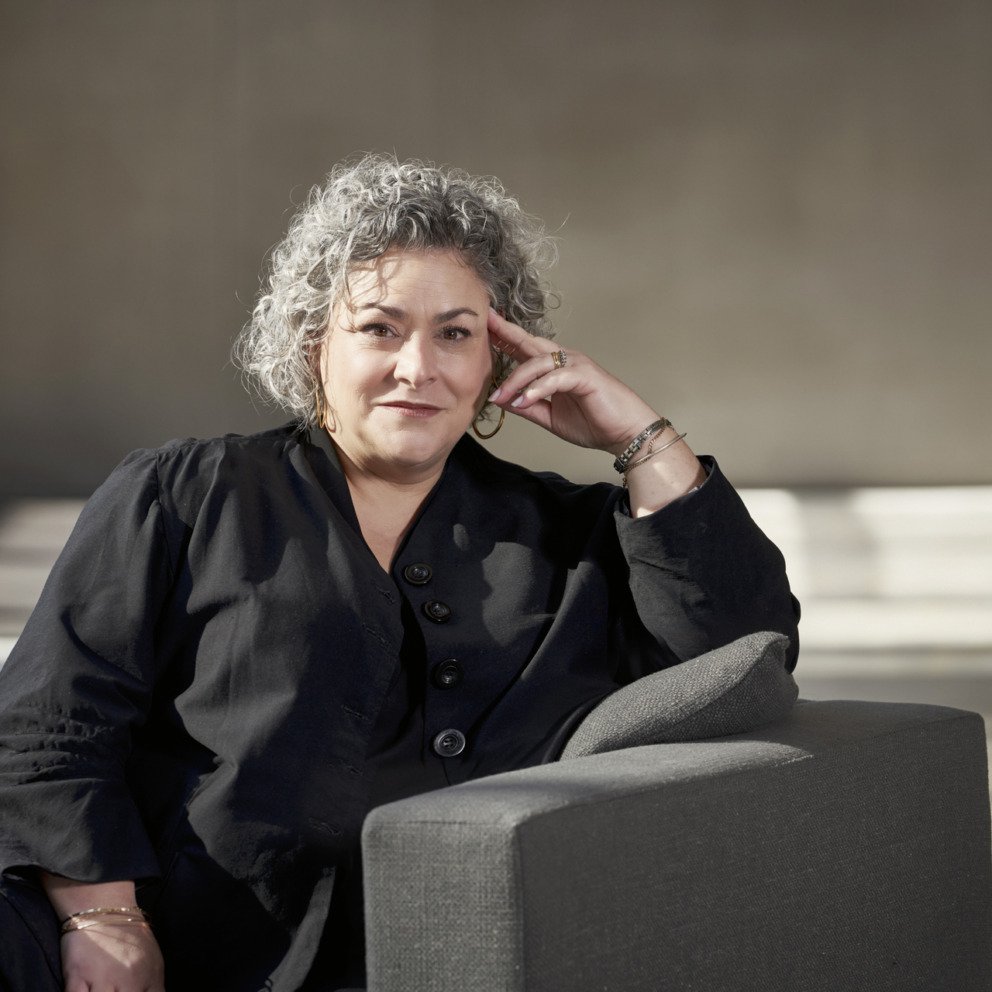
A St. Louis transplant who has lived here for 17 years, Cooksey joined RAC in November 2020 after a career of problem-solving roles in sectors spanning entertainment, retail, banking, philanthropy, and government.
“I’m a generalist, so I like to know a little bit about a whole bunch of things. I was on a specialist path in my career and I was ready to lead an organization,” Cooksey says of stepping into her role at RAC. “It really captured all of my experience.”
Taking the helm of an arts funding organization at the height of the 2020 global health crisis, when the world was largely shut down and the arts were at a standstill, posed a unique set of challenges. RAC receives a majority of its revenue from St. Louis’ hotel and motel occupancy tax, and with hotels near-empty, the organization went from $6 million in revenue to $3 million in just six months.
“I came in at the $3 million mark, so we lost half our revenue, a quarter of our staff, and there was really no end in sight. We had to completely change our grant-making process,” Cooksey says. “It was intense to say the least, but I made sure that we prioritized the needs of our arts organizations.”
RAC partnered with the Missouri Arts Council to create The Missouri Art Safety Alliance, handling all certifications and providing funding and guidance to help arts organizations get the personal protective equipment and necessary infrastructure in place to ensure that the arts could continue.
“The arts have a healing power unlike any other industry, and people needed to find ways to experience joy and togetherness,” Cooksey says. “Our arts and culture organizations and our artists rose to the occasion and also told the story of the (global health crisis) and captured how people were feeling in that level of loss and trauma. When there’s some form of challenge in the world, that’s when the arts really show up and activate.”
Coming out of the global health crisis, after a historic 18-month regional advocacy campaign, RAC received $10.6 million in ARPA funding from the City of St. Louis in October 2022. In partnership with the city’s Community Development Administration, RAC created the ARPA for the Arts grants program to distribute these vital funds quickly and effectively, providing 195 awards to artists and 75 awards to organizations within a 15-month period.
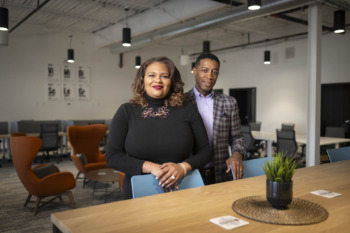
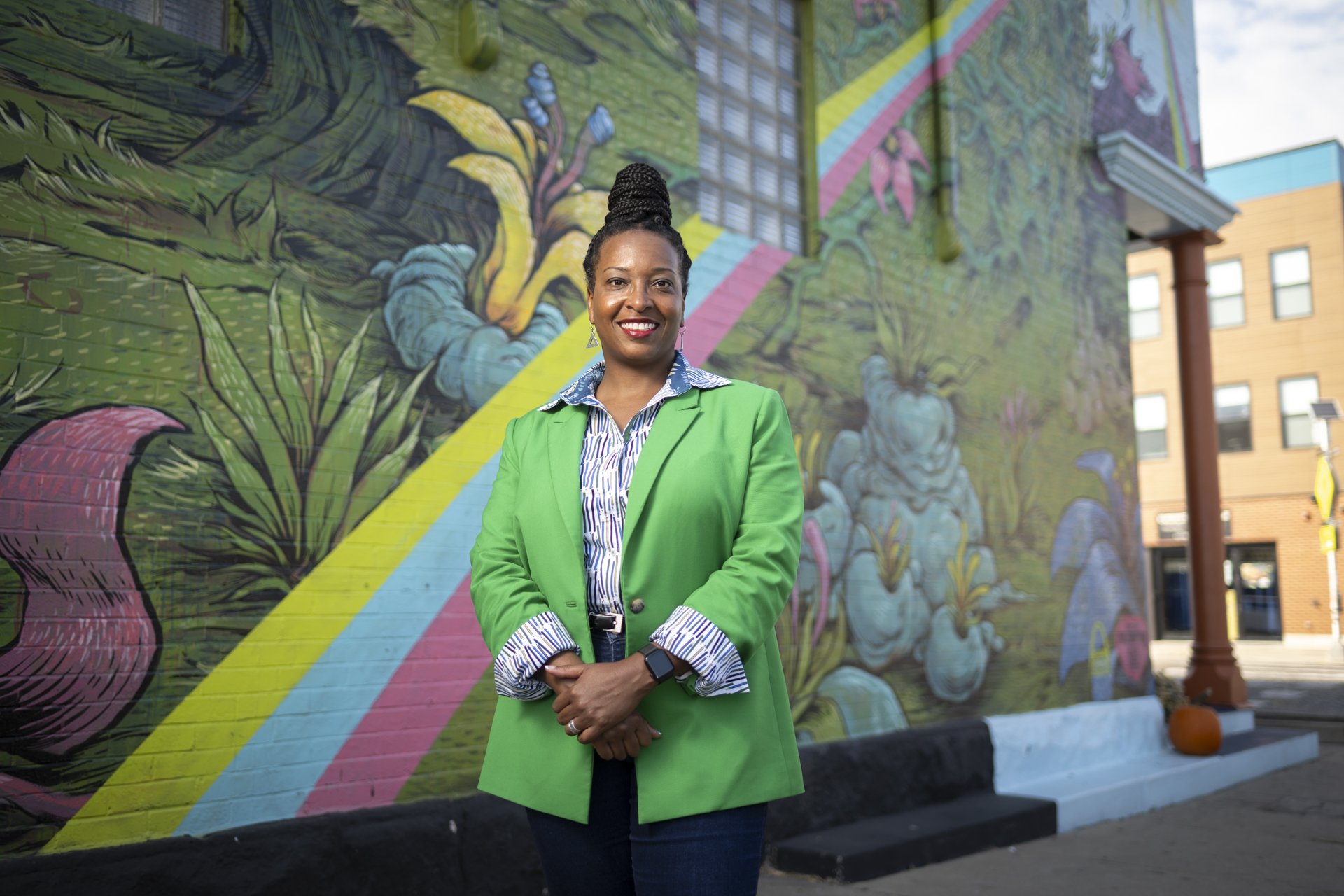
Tracey Morgan-Harris was brought on as the ARPA for the Arts Lead to manage distribution of the funds with a priority on income replacement for artists, and revenue replacement for arts organizations. The St. Louis Mural Project became a part of this process. In putting out the call for artist applications, Morgan-Harris and the ARPA team made sure they met the required specifications: that they lived in the City of St. Louis, and that the global health crisis had a negative financial impact on their artistic practice. Over 100 applicants were narrowed down to 28. As a result of the project, 60 percent of the participating artists received new commissions based on their work.
“The significance behind it when we did the call was to either choose a mural that had historical value to the ward or a mural that would involve community engagement,” Morgan-Harris says. “It was wonderful to see it in action. For those that did the community component, having kids come in and paint a piece of it or putting handprints on the wall, that’s something that stays with people. They drive past that and think, ‘I did this. I was a part of this magic.’ It’s not just about putting paint on the wall. You have now advocated for the arts. You are a part of something that has never been done before. There’s historical value to this.”
Artist Carolyn Lewis created a mural in Ward 2 titled “We Are Empowered.” After completing it, she says she made a list of bigger, bolder goals for her art business and tackled them one by one, including traveling the country exhibiting her artwork, painting more murals throughout St. Louis, and pursuing other opportunities outside of her comfort zone.
“For me, the mural project became a launching pad for countless unique and fulfilling artistic opportunities. Creating the mural for Ward 2 gave me the confidence to stretch my goals, believe in myself, and keep going — even when I doubted my abilities,” Lewis says. “I wouldn’t have taken these steps without the support of the Regional Arts Commission and the chance to be part of the St. Louis Mural Project. These murals have brought beauty — and a sense of determination — to every corner of our city.”
Another ARPA-funded project Morgan-Harris and her team are currently working on is the St. Louis Film Project. In partnership with Continuity, RAC selected five filmmakers who live in the City of St. Louis and whose work was near completion when it was affected by the global health crisis, and provided them each with a grant of $100,000 to complete their projects. The selected filmmakers must film in the city and use local residents and production staff to pour back into the local economy. The completed films will be showcased in March 2026 at Alamo Drafthouse at City Foundry STL.
“I love RAC and our team because everyone is extremely passionate about what they do and wanting to elevate St. Louis as a whole,” Morgan-Harris says. “We are such a powerful city when we just work together. We want the artists to see themselves reflected in the opportunities that RAC has and we want to educate artists so they know that these opportunities exist.”
Arts and Commerce
Another of RAC’s primary goals that Cooksey is particularly passionate about is shining a light on how much the arts contribute to St. Louis’ overall economic growth and sustainability. For the past 30 years, RAC has partnered with Americans for the Arts to produce the Arts and Economic Prosperity Study (AEP), measuring the economic impact of the arts and culture sector. The sixth study, published in October 2023, showed that the sector is responsible for $868 million in economic activity. “For this region that’s almost a billion dollars,” Cooksey says.
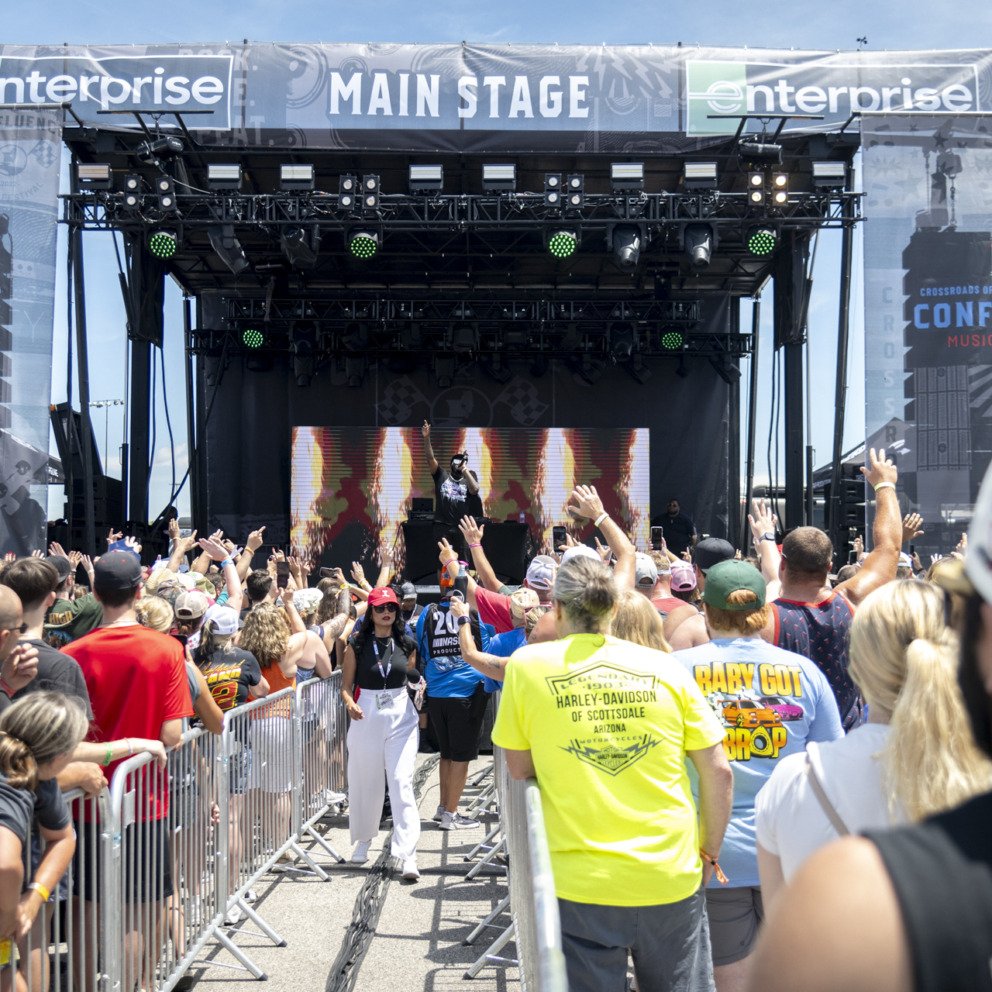
Additionally, with more than 8.1 million local and out-of-town tourists attending theater performances, concerts, art fairs, festivals, and more in St. Louis, attendance at arts events generates income for other local businesses like restaurants, hotels, and retail stores.
“One of the things I love most about RAC is looking at the full macroeconomics and the microeconomics of our industry,” Cooksey says. “We are generating economic activity across sectors. It’s not just the arts itself.”
Another measurement of the AEP is job creation. The most recent study shows that St. Louis arts and culture nonprofits provide nearly 12,000 jobs to residents in the region — contributing more than $611 million in wages.
“Every possible skill exists in the arts. There’s carpentry, computer science — the sets that are built and the graphics that are created on screens — the security and the ushers, and then the people on stage,” Cooksey says. “People who want to be in the creative economy don’t have to move to Nashville, Atlanta, New York, or L.A. in order to make a living and have a quality of life. As RAC is able to grow and fund these arts organizations with general operating support grants, that creates opportunity for top talent to come here and stay.”
Steering that growth is RAC’s V.P. of Growth and Development, Angie Peters, who spends much of her time meeting with both current and prospective partners, from individuals to corporations of all sizes, looking for new ways to collaborate. Under her leadership, the Growth and Development department makes up half of RAC’s full-time staff.
“We think of growth and development as growing the business of RAC, the enterprise — helping people understand our economic impact as well as our impact around cultural tourism,” Peters explains. “The arts are really well positioned to continue helping brand St. Louis, and we want to ensure that the arts have the space that they deserve in that amplification. It’s about raising money to make sure that we can do more of what RAC does — fund artists and arts organizations better by engaging more people in the conversation so that the collaborative is larger, deeper, and more meaningful for everybody involved.”
A Bright Future
Heading into 2026, RAC’s board approved a new strategic roadmap that positions the organization to take on greater leadership in the region as it relates to collaboration, partnerships, and arts integration. Cooksey is looking at how the arts can partner with health care with the knowledge that art therapy helps people heal better and faster. She is also exploring partnerships with economic development organizations in recruiting businesses here by showing them that St. Louis is a great place to raise a family and build a life with its arts and culture as a key part of that equation.
“I want RAC to have a seat at the table as we are looking to help the region move forward, not just from a public and governance perspective, but from an industry perspective,” she says. In this 40th year, I wanted to take a 10-year view and keep this question at the forefront: ‘How will St. Louis be better and different because RAC exists?’”
When she moved to St. Louis for a job with Save A Lot 17 years ago, Cooksey admittedly thought she would only be here for a few years. She credits her employers’ incorporation of St. Louis’ cultural scene into her onboarding as a major factor in her staying and calling it home.
“The culture of collaboration and camaraderie in this place is unique to St. Louis, and I know that because I’ve been all over the world,” she says. “With additional resources, our arts and culture sector will rival New York, L.A., Atlanta, London, or Paris, because the artists here support each other and they’re more open to innovation than anywhere I’ve seen. The only thing that separates St. Louis from New York and L.A. is capital, because we have the talent, the creativity, and the innovation that is second to none.”